The Professional’s Guide to the Invisible Bathroom Remodel
Most bathroom remodeling guides start with vanity styles, paint colors, and fixture finishes. That is the wrong place to begin.
The difference between a bathroom that looks good for five years and one that functions flawlessly for fifty isn’t the tile you choose. It is what happens behind the drywall. Professional remodelers know that a bathroom is essentially a structural box designed to endure constant moisture, thermal expansion, and heavy daily use. If you fail to engineer the room correctly, no amount of expensive marble will save you from cracked grout, mold, or rotting subfloors.
If you want a renovation that actually adds lasting value to your home, you need to understand the invisible bathroom. Here is the professional standard for what should be happening under the floorboards and behind the walls.
1. The Anatomy of a High-Performance Wet Room
Homeowners often assume that ceramic tile and grout are waterproof. They are not. They are simply water-resistant wear layers. If water sits on grout long enough, it will penetrate.
In decades past, builders relied on thick mortar beds and plastic liners to manage this moisture. Today, building science has evolved. High-end remodels rely on integrated waterproofing and uncoupling systems.
The Professional's Guide to the Invisible Bathroom Remodel 6
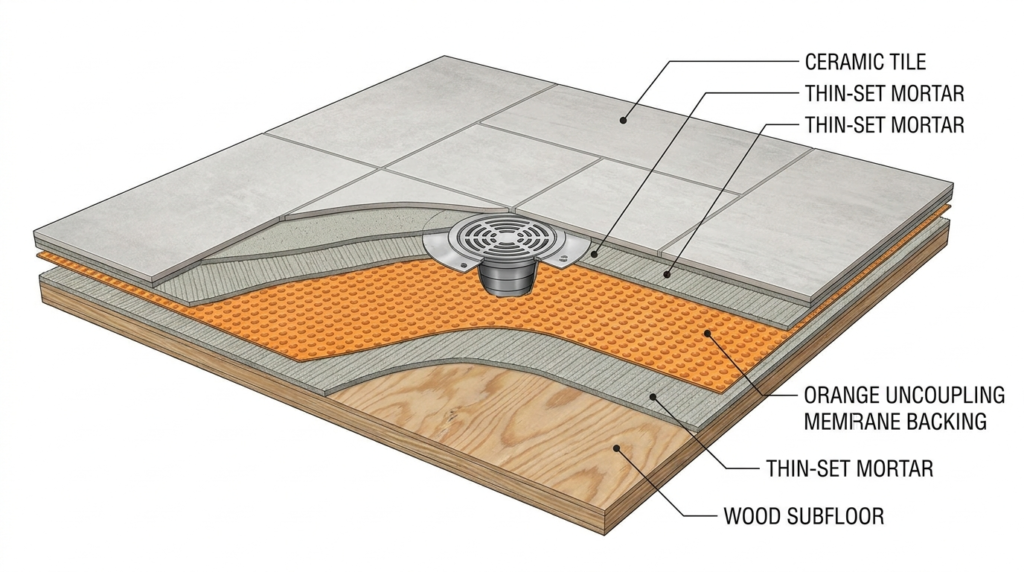
Before a single tile is laid, your contractor should be discussing uncoupling membranes. Materials like wood subfloors naturally expand and contract with seasonal humidity. Tile and stone do not. If you bond tile directly to wood, the opposing movements will eventually cause the tile or grout to crack. An uncoupling membrane sits between the subfloor and the tile, allowing the two layers to move independently.
Beyond uncoupling, you need a continuous, topical waterproofing strategy. This often involves applying a liquid membrane or bonding a specialized waterproof sheet directly over the drywall and cement board. The goal is to create a fully sealed, watertight envelope before the decorative finishes are ever applied. If your contractor is still just screwing plain cement board to the studs and slapping tile on it, you are paying for an outdated and risky installation.
2. The Structural Reality Check
Upgrading your bathroom often means adding significant weight. A cast-iron tub, a custom glass shower enclosure, and large-format natural stone tiles place immense stress on your home’s framing.
Professionals calculate this stress using a measurement called deflection. Deflection is simply how much your floor bends under weight. Standard building code requires a deflection rating of L/360 for basic ceramic tile. However, if you are installing natural stone like marble or travertine, the floor must be twice as rigid, requiring a rating of L/720. If your contractor doesn’t assess your floor joists to ensure they meet this standard, your expensive stone floor is practically guaranteed to crack.
The Professional's Guide to the Invisible Bathroom Remodel 7
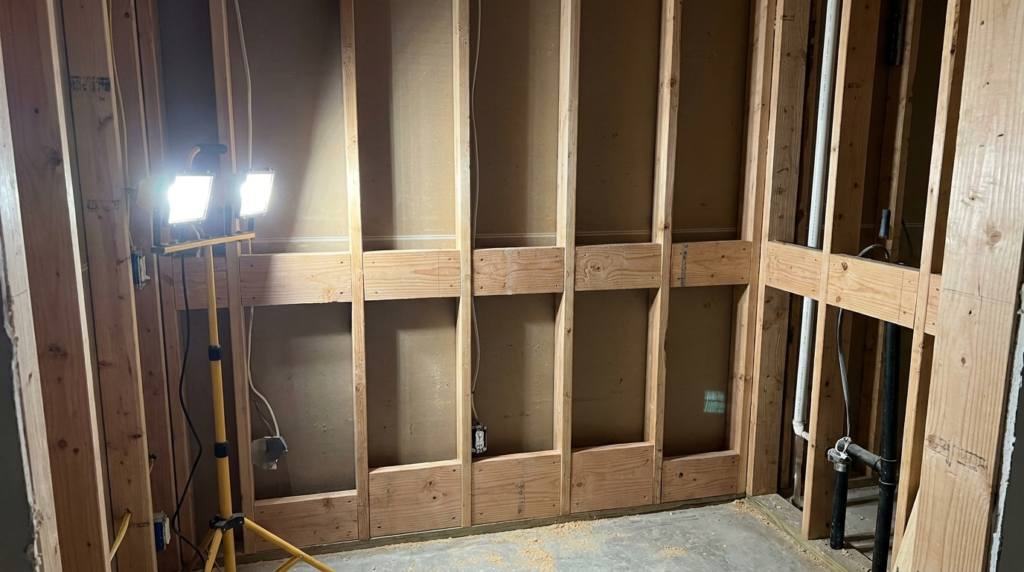
While the walls are open, you also need to plan for the future. This is the time for blocking. Blocking involves installing solid wood supports horizontally between the wall studs. You need blocking anywhere you plan to mount something heavy. This includes floating vanities, heavy glass shower doors, and especially grab bars. Even if you don’t need grab bars today, installing the structural support for them now costs pennies and future-proofs the bathroom for aging in place.
3. Mechanical Integrity: Plumbing and Air Flow
Water pressure and drainage are only half the plumbing equation. The other half is acoustics.
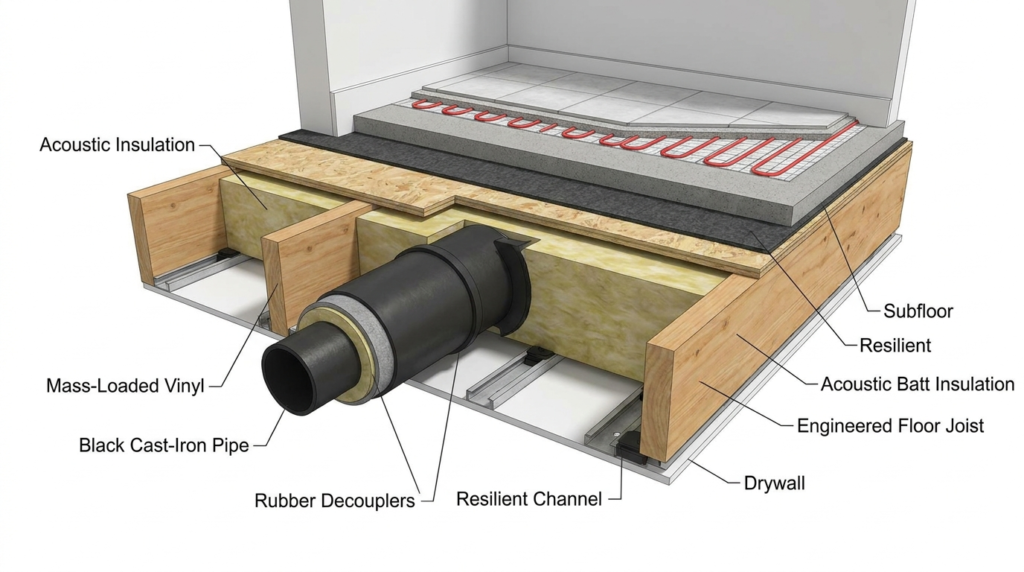
Standard PVC drain pipes are loud. When someone flushes a toilet upstairs, you should not hear a waterfall echoing through your kitchen walls. Professional remodelers solve this by swapping standard thin-wall PVC for cast-iron drop pipes in shared walls. If cast iron breaks the budget, they use heavy acoustic insulation wraps around the PVC. It is a minor material upgrade that drastically changes how solid and well-built the home feels.
The Professional's Guide to the Invisible Bathroom Remodel 8
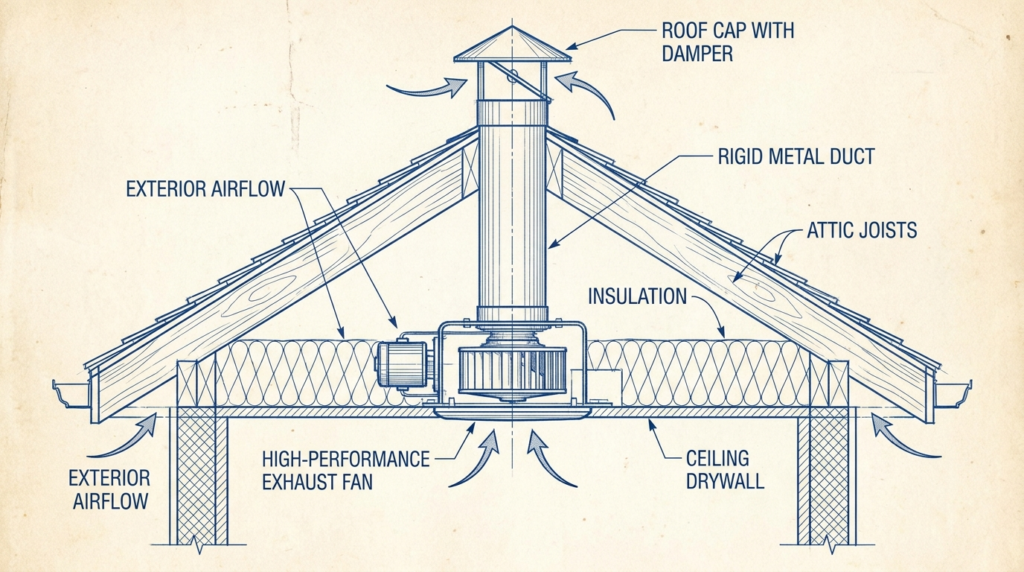
Then there is ventilation. Most builder-grade exhaust fans are severely undersized. They make a lot of noise but fail to actually move moisture. A high-performance bathroom requires a fan specifically calculated for the room’s volume, measured in Cubic Feet per Minute (CFM).
But a strong fan is useless if the ductwork is wrong. Professionals use rigid metal ducting routed along the shortest possible path to the exterior roof or siding. Flexible, corrugated plastic ducts trap moisture and reduce airflow. And venting a bathroom fan into an attic is a massive building code violation that simply pumps mold directly into your roof structure.
4. Electrical Loads and Thermal Comfort
Modern luxury bathrooms consume a staggering amount of electricity. Hair dryers, heated towel racks, electronic bidet seats, and steam generators all draw massive loads.
Tying a new luxury bathroom into an existing bedroom circuit is a guaranteed recipe for tripped breakers. A professional remodel involves running multiple dedicated 20-amp circuits straight from the electrical panel. You need specific, isolated lines for heating elements and separate lines for your vanity outlets.
The Professional's Guide to the Invisible Bathroom Remodel 9
If you are investing in radiant floor heating, the installation method dictates how well it actually works. Heat naturally rises, but it also sinks into cold subfloors. Professionals don’t just lay heating mats directly on plywood or concrete. They install a thermal break first. This is usually a specialized synthetic underlayment that forces the radiant heat upward through the tile. Without a thermal break, you waste money and electricity warming the crawlspace below you instead of your feet.
FAQ: The “Invisible Bathroom” Contractor Vetting Checklist
You understand the technical standards now. The next step is finding a contractor who actually builds to them. When interviewing a professional, skip the basic questions about timelines and paint colors. Ask these five technical questions to see if they understand high-performance construction.
1. How do you waterproof your custom shower builds?
The Green Flag: They mention topical waterproofing, sheet membranes, or liquid-applied systems. They talk about creating a sealed envelope before the tile ever goes up.
The Red Flag: They say they use green water-resistant drywall or plain cement board with standard thin-set mortar.
2. I am thinking about large-format marble for the floor. How do you prep the subfloor for that?
The Green Flag: They immediately mention checking the floor joists for deflection. They know natural stone requires a much stiffer floor than ceramic. They should mention measuring the joist span and potentially adding another layer of subfloor or an uncoupling membrane.
The Red Flag: They say they will just screw down some backer board and start tiling.
3. Where do you typically install wooden wall blocking during the framing stage?
The Green Flag: They list off locations without hesitation. They will mention structural support behind floating vanities, heavy glass shower door hinges, and especially inside the shower walls for future grab bars.
The Red Flag: They ask what you mean by blocking or tell you they just rely on heavy-duty drywall anchors.
4. I am worried about hearing the new shower drain in the living room below. What is your solution?
The Green Flag: They suggest swapping the main vertical drop pipe to cast iron or wrapping standard PVC in acoustic insulation before the drywall goes up.
The Red Flag: They brush off your concern and say standard plastic pipes are perfectly fine.
5. How are we handling the exhaust fan venting and new electrical loads?
The Green Flag: They specify using rigid metal ducting routed directly through the roof or an exterior wall. For electrical, they confirm they will pull new, dedicated 20-amp circuits for high-draw items like heated floors.
The Red Flag: They suggest using flexible plastic ducting, mention venting the fan into the attic space, or say they can just tie the heated floors into the existing bedroom outlets.