
Start Here: Quick-Impact Changes for Any Small Kitchen Remodel
Most small kitchen remodels in 2026 happen in spaces under 120 square feet—think city condos, accessory dwelling units, and those charming 1950s bungalows with galley kitchens that feel like cooking in a hallway. The good news? Smart planning matters more than square footage, and you can transform how your kitchen looks and functions without knocking down walls.
Before you start your remodel, browse online galleries or social media for small kitchen inspiration. Seeing real-life makeovers and interior design ideas can spark creativity and help you plan your own project.
Before diving into larger renovation projects, here are quick wins you can tackle in a single weekend:
- Swap hardware: Replace dated knobs with slim brushed nickel or matte black bar pulls scaled to your cabinet faces
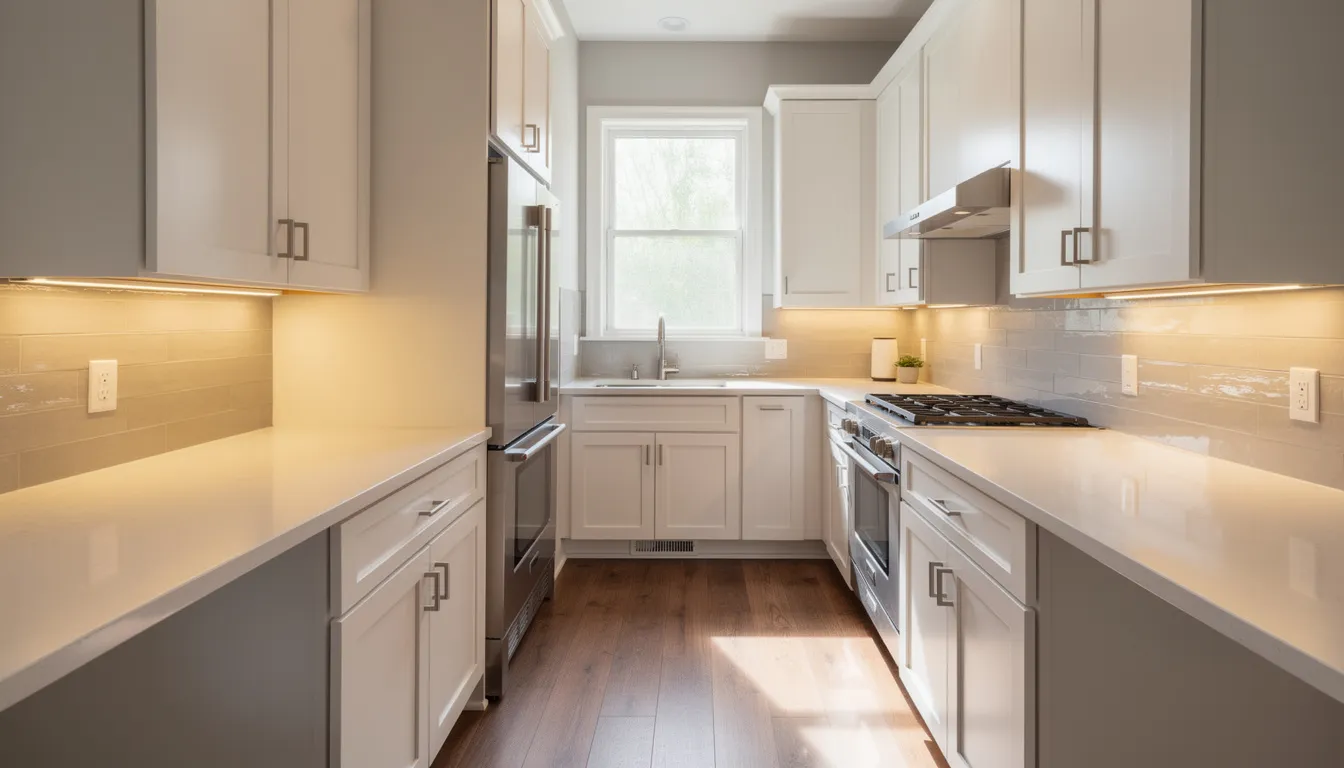
- Repaint cabinets: A light neutral like warm white or pale greige instantly opens up the room—this is a classic interior design strategy for updating a kitchen’s look
- Add LED under-cabinet strips: These create task lighting and make counters feel more spacious
- Install one vertical rail with hooks: Reclaim counter space by hanging frequently used utensils
- Clear 80% of countertop items: Store small appliances, cutting boards, and random clutter elsewhere
- Add a mirror or reflective element: Even a small one opposite a window bounces more light around and can break up visual monotony, adding interest to the space
Consider a 90 sq ft 1960s galley in Chicago that underwent this exact treatment (credit: @chicagokitchenreno). The homeowners repainted dark oak cabinets in a creamy white, installed warm LED strips under the uppers, and relocated the toaster, blender, and knife block to a new appliance garage. The result? The space visually doubled without moving a single wall or cabinet.
The rest of this article dives into eight larger remodel ideas—from floor-to-ceiling storage solutions to appliance garages and compact kitchen design layouts that make every square inch count.
Idea #1: Rethink Your Layout for a Compact Kitchen Design That Actually Works
In a small kitchen remodel under 110 square feet, layout decisions have more impact than finishes. Rethinking where your appliances, sink, and prep zones sit can add usable counter space that no amount of pretty tile can replicate. These choices are as much about interior design as they are about function, ensuring your kitchen is both stylish and efficient.
The Adapted Work Triangle for 2026
The classic kitchen work triangle—connecting your sink, stove, and refrigerator—needs adjustment for compact spaces. For small kitchen design, aim for a combined distance of 12–20 feet across all three main work areas, with each leg measuring 3–7 feet. This keeps everything within easy reach without creating a cramped, bumping-into-everything layout.
Layout Guidance by Kitchen Type
| Layout Type | Typical Size | Key Strategy |
|---|---|---|
| Single-wall | 8–10 ft long | Prioritize a 24” stove, 24” fridge, and 15–18” dedicated prep zone between them |
| Galley | 7–8 ft width | Keep one side mostly for tall storage; opposite wall handles main prep and cooking |
| L-shaped | Varies | Add a 12–18” return leg to create a mini peninsula for extra work surface |
For a full gut remodel, consider moving plumbing and electrical early in the planning phase. A realistic timeline for a complete small kitchen remodel in 2026 runs 4–8 weeks, depending on permits and trade availability in your area.
A simple floor plan comparison—showing “before” with a cramped traffic pattern versus “after” with improved flow—can help you visualize how relocating even one element changes everything. In a 95 sq ft kitchen, moving the fridge from blocking the main walkway to an end-wall position can open up sight lines and create a more functional room.
Idea #2: Go Vertical – Floor-to-Ceiling Storage for Small Space Storage Solutions
Most small kitchens waste 20–30 inches of space above upper cabinets. That dead zone collects dust and does nothing for your storage needs. In 2026, the smartest remodels use full-height cabinetry stretching from floor to ceiling—typically 96” to 108” tall. This approach can break up the monotony of standard upper cabinets and add architectural interest to your small kitchen.
How to Design Floor-to-Ceiling Cabinets
Focus on at least one wall for maximum vertical space impact:
- 12–15” deep tall pantry cabinets with pull-out shelves for easy access to canned goods, dry pantry items, and food storage containers
- Extended uppers to the ceiling with simple flat trim or matching filler—no dust-catching gap above
- Slim 6–9” pullout pantries beside the refrigerator for oils, spices, and vinegars
- One tall broom/storage cabinet for mop, vacuum, and step stool (critical in apartments without utility closets)
What Goes Where
Reserve the top 1–2 shelves (above approximately 84”) for rarely used or seasonal items: holiday platters, large stockpots, specialty appliances you use twice a year. Store these in labeled bins so you’re not blindly reaching.
The middle zones—roughly 24” to 72” from the floor—should house everyday dishes, glasses, and frequently accessed ingredients. This follows the principle that your most-used items live at arm’s reach.
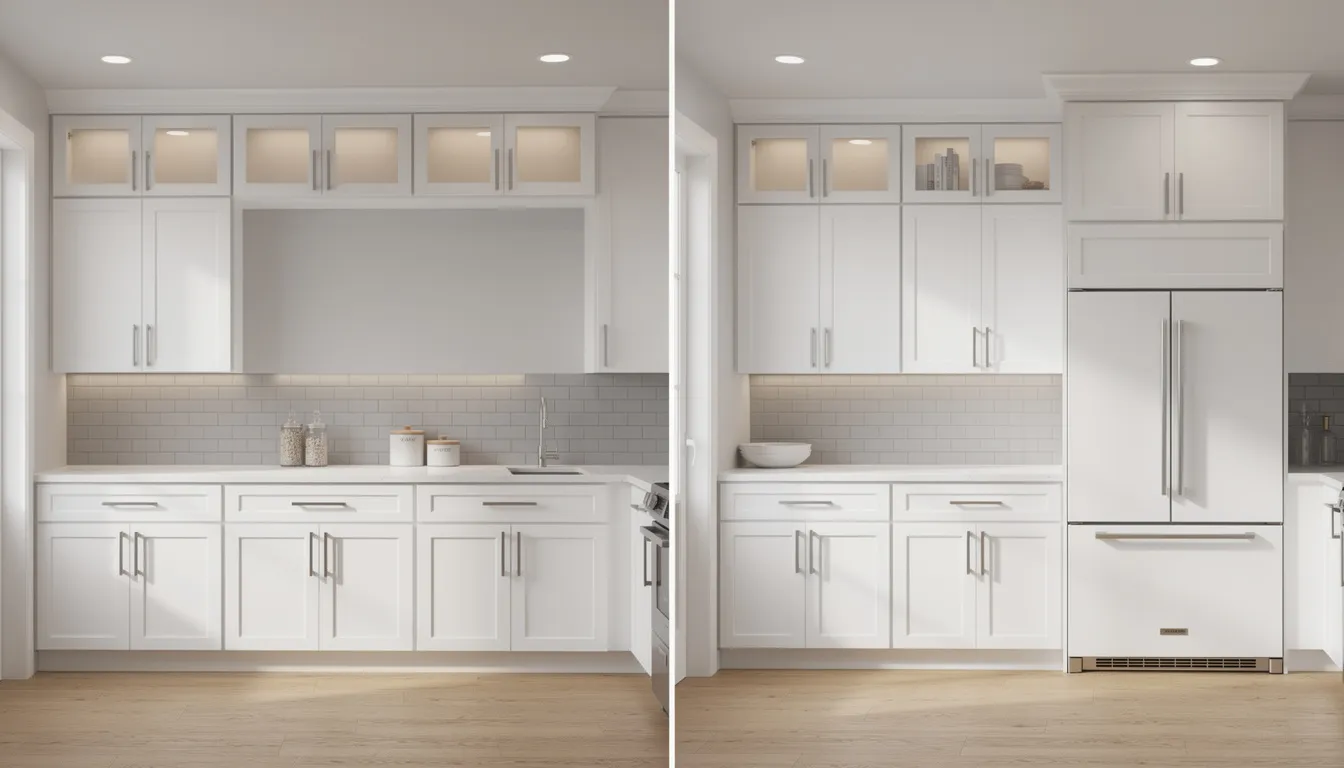
This approach to vertical storage and compact kitchen design can effectively double your storage capacity in a 50-square-foot kitchen without expanding the footprint.
Strategic Use of Floating Shelves for Style and Storage
Floating shelves are a game-changer for small kitchen design, offering a smart way to maximize storage space while adding a modern, airy touch. By taking advantage of vertical space, floating shelves help you make every square inch count—keeping countertops clear and giving your kitchen a more open, organized feel. Unlike bulky upper cabinets, floating shelves create visual flow and let natural light move freely through the space, making even the smallest kitchen feel larger and more inviting.
Where to Add Floating Shelves
The beauty of floating shelves is their flexibility—they can be installed almost anywhere you have an empty stretch of wall. Consider adding a shelf above the kitchen sink for easy access to everyday dishware or glassware, or place a couple of shelves near the stove to keep spices, oils, and cooking essentials within arm’s reach. In small spaces, floating shelves along a blank wall can serve as a home for mugs, bowls, or even a few decorative pieces, all without crowding your main work areas. When planning your layout, be mindful not to block the flow between the sink, stove, and refrigerator—the three main work areas that keep your kitchen running smoothly. Carefully chosen shelf placement ensures you gain storage without sacrificing function or creating obstacles in your cooking routine.
Balancing Display and Function
Floating shelves offer the perfect opportunity to blend style and practicality in your kitchen. To keep your space feeling open and uncluttered, use the shelves to store items you reach for daily—think small appliances, cutting boards, or your favorite cookbooks. Reserve a few spots for personality: a vintage jar collection, a framed recipe, or a potted herb can add warmth and charm. The key is to avoid overcrowding; too many items can make the kitchen feel cramped. By striking the right balance between display and function, floating shelves help you create a beautiful, functional kitchen that reflects your style and keeps everything you need close at hand.
Idea #3: Multi-Functional Islands and Peninsulas in Small Kitchens
In kitchens under 120 sq ft, a full island (over 60” x 36”) usually doesn’t fit—and trying to force one creates a cramped, frustrating space. But multi-functional narrow islands or peninsulas can add prep surface, casual dining, and built in storage without sacrificing walkways. A well-placed peninsula or island can also break up the kitchen layout, creating distinct prep and dining zones for better functionality.
Three Solutions That Actually Fit
Rolling Cart Island (Best for 70–80 sq ft galleys)
- Dimensions: 18–24” deep with locking casters
- Top: Butcher block for prep work
- Perfect for renters who can’t make permanent changes
Fixed Peninsula
- Dimensions: 48” x 24” attached to a wall or cabinet run
- Seats two on counter stools
- Storage on the kitchen side for pots, pans, and cookbooks
Drop-Leaf Island
- Dimensions: 36–42” long, folds down to 12–15” deep when not in use
- Ideal when you need the floor space for daily traffic but want occasional prep area
Clearance Requirements
Follow NKBA guidelines: maintain minimum 36” clearances around the island (42” is ideal for comfortable movement). In truly tight spaces, keep one side of the island open underneath so stools tuck completely in when not in use.
Consider incorporating storage features inside your island: deep drawers for large pans, a pull-out trash/recycling center, and open cubbies for cookbooks or baskets.
| Island Type | Best For | Pros | Cons |
|---|---|---|---|
| Rolling cart | Renters, tiny galleys | Movable, affordable, no installation | Less stable, limited storage |
| Fixed peninsula | Homeowners, L-shaped kitchens | Permanent prep space, more storage | Requires planning, can’t relocate |
| Drop-leaf | Flexible needs | Saves space when folded, versatile | Less sturdy than fixed options |
Utilizing Kitchen Corners: Unlocking Hidden Potential
Kitchen corners are often overlooked, but with the right approach, they can become some of the most valuable storage spaces in your entire kitchen. By tapping into these underused areas, you can create extra storage, improve your kitchen’s workflow, and make every inch work harder for you.
Corner Cabinet Innovations
Modern corner cabinets are designed to turn awkward, hard-to-reach spaces into highly functional storage zones. Instead of letting these corners collect dust, consider installing cabinets with rotating carousels (like a classic lazy Susan), pull-out drawers, or adjustable shelving. These innovations make it easy to store and access pots, pans, and other cooking essentials—no more digging in the dark for that missing lid. For example, a pull-out drawer with a built-in mixer lift can keep your stand mixer handy but out of the way when not in use. Adjustable shelving lets you customize the space for everything from baking pans to small appliances. By investing in corner cabinet solutions, you maximize every square inch, keep your kitchen organized, and ensure that even the trickiest corners serve a functional purpose in your daily cooking routine.
Idea #4: Color Psychology and Reflective Surfaces to Visually Double Your Space
In 2026, light warm neutrals and light wood tones dominate small kitchen remodel trends. These choices visually expand the entire kitchen while maintaining a cozy, inviting atmosphere that doesn’t feel sterile or clinical, and are often guided by interior design principles.
When selecting colors and finishes, seek inspiration from interior design magazines or online galleries to discover ideas that best suit your personal style and kitchen space.
Color Direction for Small Spaces
Upper cabinets and walls: Soft whites or creams—think “warm white,” “linen,” or “oyster”—reflect natural light and create an open feel. Avoid stark, cool whites that can feel harsh in small spaces.
Lower cabinets or island: Slightly deeper tones like light greige, pale sage, or sand help ground the room without shrinking it visually.
What to avoid: High-contrast dark uppers in kitchens under 90 sq ft. Dark colors absorb light and make walls feel like they’re closing in. Save dark tones for small accents only.
Reflective Material Choices
The right materials bounce light around your compact kitchen design:
- Satin or semi-gloss paint on walls and cabinetry for light reflection without a plastic look
- Glossy or honed light quartz countertops with subtle veining instead of busy speckled granite
- Simple white or pale subway tile backsplash, possibly extended to the ceiling behind the range to increase perceived height
- Glossy finishes on cabinet doors in high-visibility areas
One well-placed mirror or high-gloss panel—on a side wall or at the end of a cabinet run—can extend sight lines dramatically. Use sparingly to avoid visual clutter.
2026 Light Nordic Palette Example
| Element | Color | Effect |
|---|---|---|
| Walls | Warm white (LRV 75+) | Reflects 70–90% of light |
| Upper cabinets | Oyster cream | Bounces light, feels airy |
| Lower cabinets | Pale greige | Grounds the space |
| Countertops | Light quartz with soft veining | Adds depth without busyness |
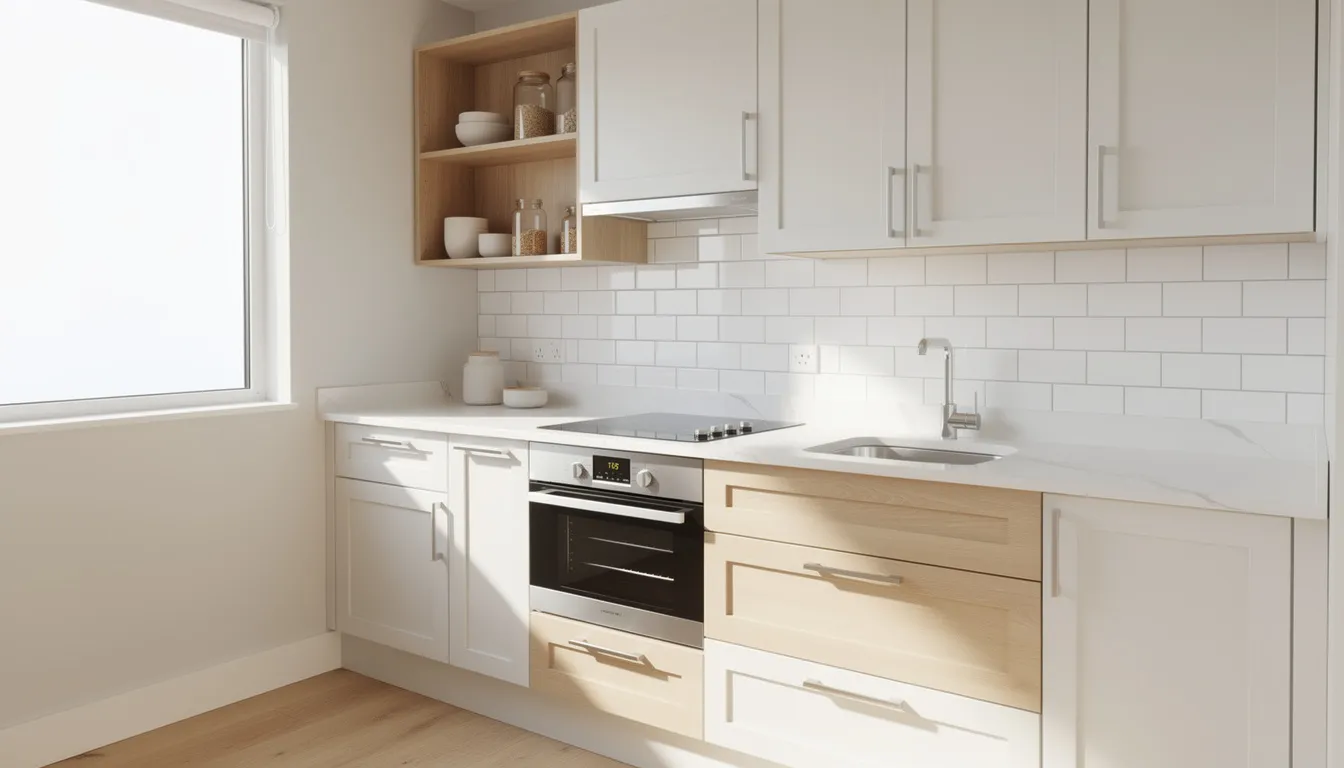
Research on color psychology suggests rooms with high Light Reflectance Values (LRV over 70%) can appear 15–25% larger—a significant gain when you’re working with limited square footage.
Idea #5: Appliance Garages and Hidden Stations to Reduce Countertop Clutter
In a small kitchen remodel, clearing counters is the single most visible way to make the room feel larger and more calm. Appliance garages have become standard in 2026 designs, and for good reason: they hide the visual noise while keeping everything accessible.
What Is an Appliance Garage?
An appliance garage is a section of counter—typically 18–30” wide—enclosed by a lift-up door, roll-up tambour, or side-swing doors. Your toasters, coffee makers, blenders, and other small appliances stay plugged in and ready to use, but they’re hidden from view when the door closes.
Layout Ideas for Hidden Stations
Corner Coffee Station (24–30” wide)
- Flip-up door for easy access
- Houses grinder, espresso machine, mugs, and syrups
- Keeps morning routine contained
Vertical Appliance Cabinet (18” wide)
- Beside the fridge
- Pull-out shelves for blender and food processor
- Uses otherwise dead corner space
Tall Pantry Station
- Microwave and small appliances behind pocket doors
- Ideal for very compact kitchen designs where counter space is at a premium
Additional Hidden Storage
- 15–18” pullout for trash and recycling
- Tilt-down sink-front trays for sponges and scrubbers
- Closed shelving instead of open display
Carefully maintaining clear counters can reclaim 20–30% of your surface area—space you actually need for meal prep, not for housing appliances you use once a week.
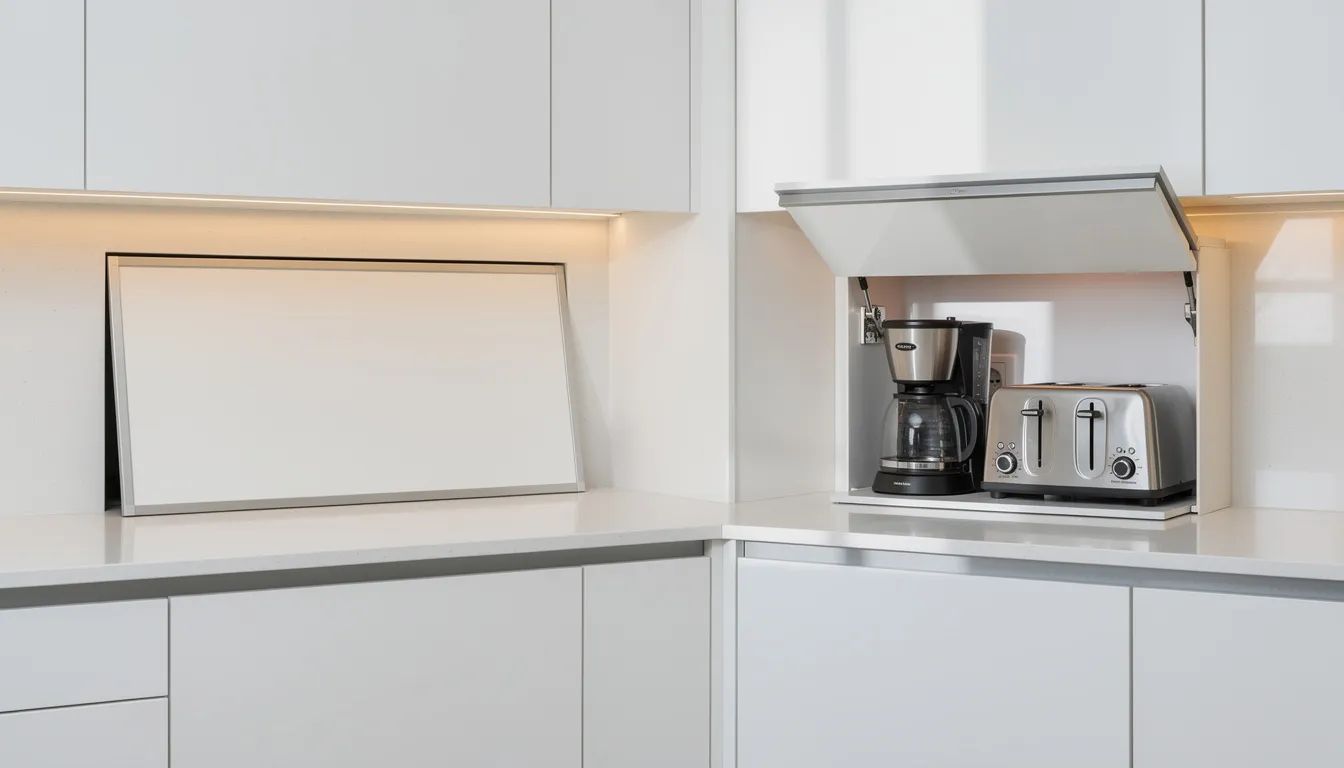
The cost for adding electrical outlets inside an appliance garage runs $500–1,500 depending on your existing wiring, but the visual payoff is immediate.
Idea #6: Smart Small-Space Appliances That Fit Your Compact Kitchen Design
Slimline appliances—24” and 30” widths, counter-depth profiles, and combination units—dominate modern small kitchen remodels in 2026, especially in urban markets where every inch matters. Choosing slimline or panel-ready appliances can break up the visual bulk and maintain a streamlined look, helping your small kitchen feel more open and organized.
Appliance Sizing Guide
Refrigerator
- Recommend 24” or 28” counter-depth models for kitchens under 100 sq ft
- Saves 6–8” of depth and several inches of width versus standard 36” fridges
- Doesn’t protrude past cabinet faces, maintaining clean sight lines
Range/Cooktop
- 24” ranges or induction cooktops with built-in electric ovens work well in tight layouts
- Consider separate cooktop and wall oven if your layout allows flexibility
Dishwasher
- 18” dishwashers or drawer dishwashers are good compromises for couples or small households
- Drawer units can be installed at counter height, reducing bending
Multi-Functional Appliances Worth Considering
| Appliance | Function | Space Benefit |
|---|---|---|
| Microwave-convection combo | Microwave + baking/roasting | Eliminates need for separate units |
| Washer-dryer combo | Laundry in the kitchen | Essential for micro-apartments |
| Slim range hood | Exhaust + lighting + controls | Reduces visual bulk above stove |
For the most seamless look, consider panel-ready appliances where your budget allows. When your fridge and dishwasher hide behind cabinet panels, the entire kitchen reads as continuous cabinetry rather than a collection of large appliances competing for attention.
Standard vs. Compact Appliance Package
| Appliance | Standard Width | Compact Width | Space Saved |
|---|---|---|---|
| Refrigerator | 36” | 24–28” | 8–12” |
| Range | 30” | 24” | 6” |
| Dishwasher | 24” | 18” | 6” |
These savings add up. In a 90 sq ft galley, switching to a compact appliance package can free up nearly 2 linear feet of wall space—enough for an additional cabinet or prep zone.
Idea #7: Small Space Storage Solutions You Didn’t Know You Had
The most successful small kitchen remodels treat every 2–3” gap and every corner as potential storage. The goal is to maximize storage without making the room feel like a cluttered warehouse.
8 Storage Upgrades to Consider
- Full-extension drawer boxes for base cabinets—replace deep, dark shelves where items disappear forever
- 90° corner solutions like blind-corner pullouts or lazy Susans to access dead zones (these can recover 90% more usable space)
- 3–9” wide pullout spice and oil racks beside the range where you actually need them
- Toe-kick drawers under base cabinets for baking sheets, trays, or kids’ art supplies
- Magnetic rails or pegboards on one designated wall for knives, pans, and utensils
- Narrow rolling pantry carts that slide between fridge and wall—perfect for renters
- Floating shelves for display and frequently grabbed items like coffee mugs or spices
- Door-mounted organizers inside cabinet and pantry doors for wrap, foil, and cleaning supplies
Beyond the Kitchen Walls
Don’t forget nearby spaces. A shallow 8–10” deep cabinet or hutch in an adjacent hallway or dining area can house overflow dishes or pantry items. Tie it visually to your main kitchen with matching paint or hardware—it will read as intentional rather than overflow.
The key is to organize carefully so everything has a designated home. When you can store items where you use them—cutting boards near the prep zone, pans near the stove, food near the fridge—the kitchen functions smoothly despite its size.
Idea #8: Lighting, Details, and Personal Touches That Complete Your Small Kitchen Remodel
Layered lighting and a few intentional interior design details and finishing touches can make a compact kitchen feel like a finished, high-end beautiful space rather than an afterthought squeezed into leftover square footage.
A Simple 3-Layer Lighting Plan
Ambient Lighting
- Slim LED ceiling fixtures or a pair of flush/semiflush mounts
- Avoid a single central dome that creates harsh shadows
- Provides overall illumination for the entire kitchen
Task Lighting
- Continuous under-cabinet LED strips along all main prep areas
- Warm color temperature (2700–3000K) for cozy but bright feel
- Install where you do actual cooking and food prep
Accent Lighting
- One or two compact pendants over a peninsula or mini island
- Small sconce over the kitchen sink
- Adds personality and visual interest
Finishing Details That Matter
Hardware: Slim, modern pulls in brushed nickel or matte black, scaled appropriately to small cabinet faces. Oversized hardware overwhelms in small spaces.
Focal Backsplash: Consider a single statement section behind the range in a patterned tile, with the rest of the kitchen in quieter materials. This creates visual interest without overwhelming.
Textiles: A washable runner or anti-fatigue mat grounds the galley and adds warmth underfoot. Choose a style that complements your overall kitchen design.
Personal Touches: Dedicate one small shelf or rail to plants, an art print, or favorite mugs. The goal is a space that feels lived-in and reflects your personality, not a sterile showroom.
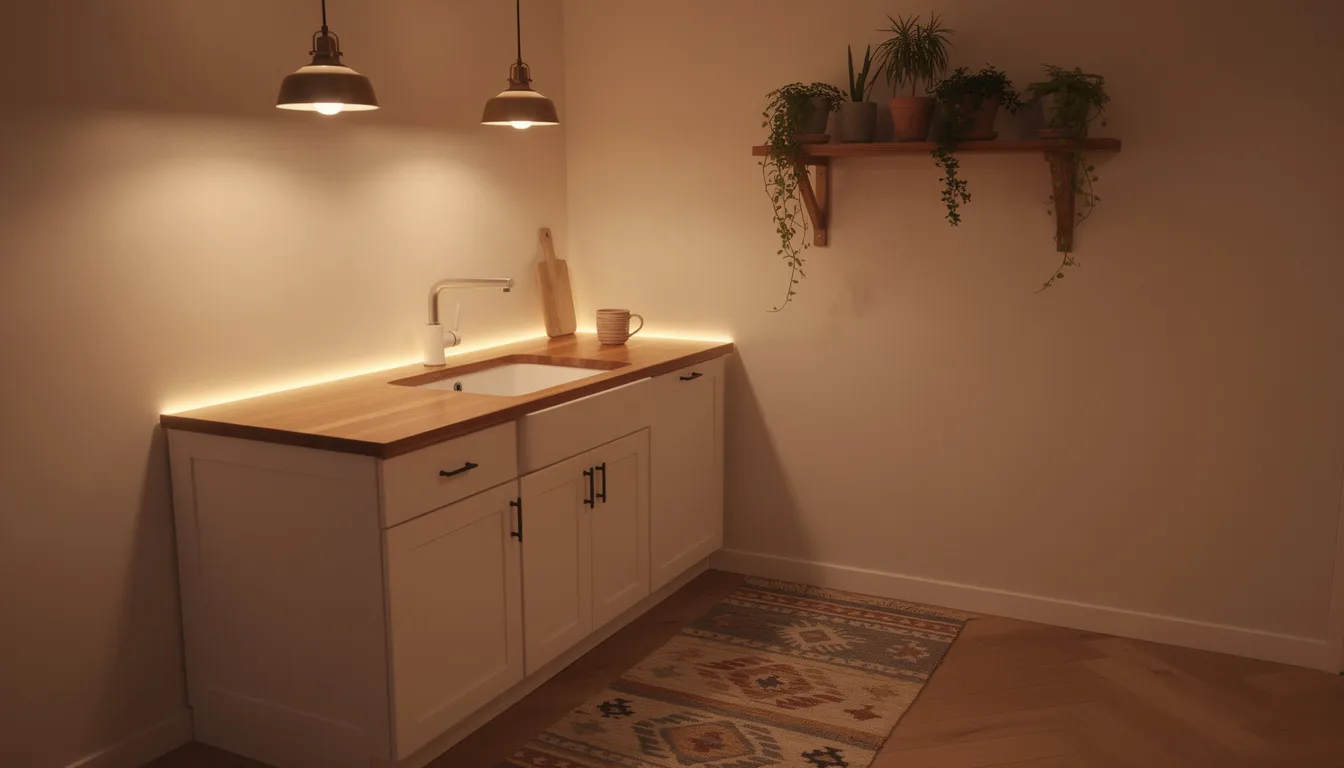
The best small kitchen remodels in 2026 balance functionality with style. Your space should work hard during meal prep and feel welcoming when family gathers, even in a country cottage or a modern York apartment.
Planning Your 2026 Small Kitchen Remodel Timeline and Budget
A realistic order of operations helps you stay on track and manage your budget without surprises.
Typical Timeline
| Phase | Duration | Activities |
|---|---|---|
| Planning & Layout | 1–3 weeks | Measure, design, order materials |
| Demolition & Rough-ins | 1–2 weeks | Remove old cabinets, update plumbing/electrical |
| Cabinets & Surfaces | 1–2 weeks | Install cabinetry, countertops, backsplash |
| Final Details | 1 week | Lighting, hardware, appliances, styling |
Budgeting Priorities
Invest first in cabinetry and storage solutions—these have the biggest impact on daily function. Next, allocate funds for lighting and appliances, then finishes like backsplash and hardware. Average costs for small kitchen remodels range from $14,600 for basic updates to $41,485 for more extensive renovations.
If budget is tight, phase your upgrades. Tackle vertical storage this year, add the appliance garage and compact appliances next year. Gradually achieving a complete compact kitchen design is better than rushing into debt or compromising on critical elements.
Key Takeaways
A successful small kitchen remodel in 2026 prioritizes layout, vertical storage, and clutter control first. Once those foundations are solid, layer in color choices, right-sized appliances, and personal details that create a space that’s bright, functional, and uniquely yours.
Remember: every square inch counts, but smart design beats square footage every time. Whether you’re updating a 70 sq ft studio galley or refreshing a 110 sq ft L-shaped kitchen, these eight ideas serve as your roadmap to a space that works as hard as you do—and looks great doing it.
Start with the quick wins this weekend, then tackle one major idea at a time. Your future self—cooking in a calm, organized, light-filled kitchen—will thank you.
