
Answering Your Question: Key Spa Bathroom Ideas to Use First
A spa-inspired wellness bathroom goes far beyond a nice tub and some candles. It’s a deliberate blend of design, mental health support, and daily rituals that transforms your morning routine and evening wind-down into moments of genuine restoration.
Homeowners in 2025–2026 are treating steam showers, soaking tubs, and mood lighting as everyday essentials rather than luxuries reserved for high-end hotels. The shift is clear: your bathroom should work as hard for your wellbeing as your bedroom does for your sleep.
This article covers four core pillars that will help you create a true spa like atmosphere at home:
- Steam vs. traditional showers — understanding when the investment makes sense
- Chromotherapy and aromatherapy — engaging light and scent for daily rituals
- Organic and biophilic materials — stone, wood, and plants that ground the space
- Wet room layouts — barrier-free designs for a seamless spa feel
A must-have feature for a spa-inspired wellness bathroom is a freestanding tub or double vanity, which instantly elevates both the luxury and functionality of the space.
Here’s my recommendation: pick one quick win you can implement this month and one long-term upgrade for a future remodel. A quick win might be swapping your shower head for a rainfall model, adding a dimmer switch, or bringing in a humidity-loving plant. A long-term upgrade could be planning for a wet room conversion or steam shower installation in your 2026 renovation.
The goal is to move beyond the bathtub by treating the entire room as a wellness retreat at home—not just the fixtures inside it.
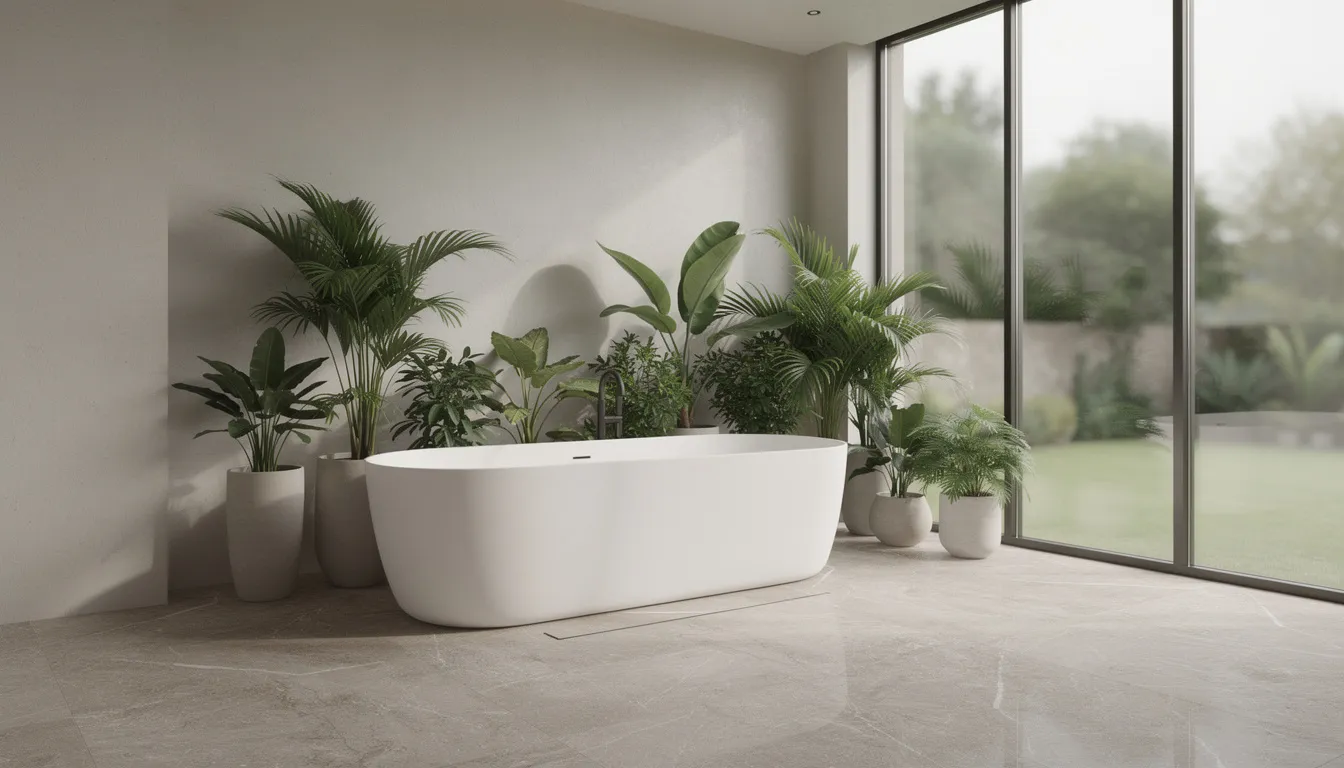
From Bathroom to Wellness Retreat at Home
Primary bathrooms have evolved dramatically since around 2020. More time at home combined with rising awareness of self care practices has transformed these spaces from purely functional rooms into personal sanctuaries. The bathroom is no longer just where you get ready—it’s where you recover.
A spa bathroom directly supports mental health in ways that matter daily. Reduced visual clutter signals calm. Soothing natural materials lower stress responses. Therapeutic water and layered lighting help you transition from “on” to “off” mode after a long day of work and responsibilities.
What separates a standard “nice” bathroom from a true wellness bathroom? The difference comes down to ritual versus function. A wellness bathroom is designed around the rhythms of your life:
| Time of Day | Ritual | Supporting Features |
|---|---|---|
| Morning | Wake-up and energize | Bright task lighting, invigorating shower, cool tones |
| Post-work | Decompress and transition | Warm bath, dimmed lights, aromatherapy |
| Pre-bed | Wind down for sleep | Steam shower, soft ambient glow, calming scents |
Think about specific features that support this lifestyle. A steam shower after a cold winter workout. A deep soaking tub for your Sunday reset bath. Underfloor heating that eliminates the shock of cold tile on your feet during those dark winter mornings.
When planning your space, consider “zones of recovery” rather than just fixture locations. Where will you bathe? Shower? Groom? Simply sit and breathe? This mindset shift makes all the difference between a bathroom that looks nice and one that genuinely supports your wellbeing.
Steam Showers vs. Traditional Showers
This section compares steam showers and conventional showers with practical pros, cons, and planning notes—not technical plumbing specifications that belong in a contractor’s manual.
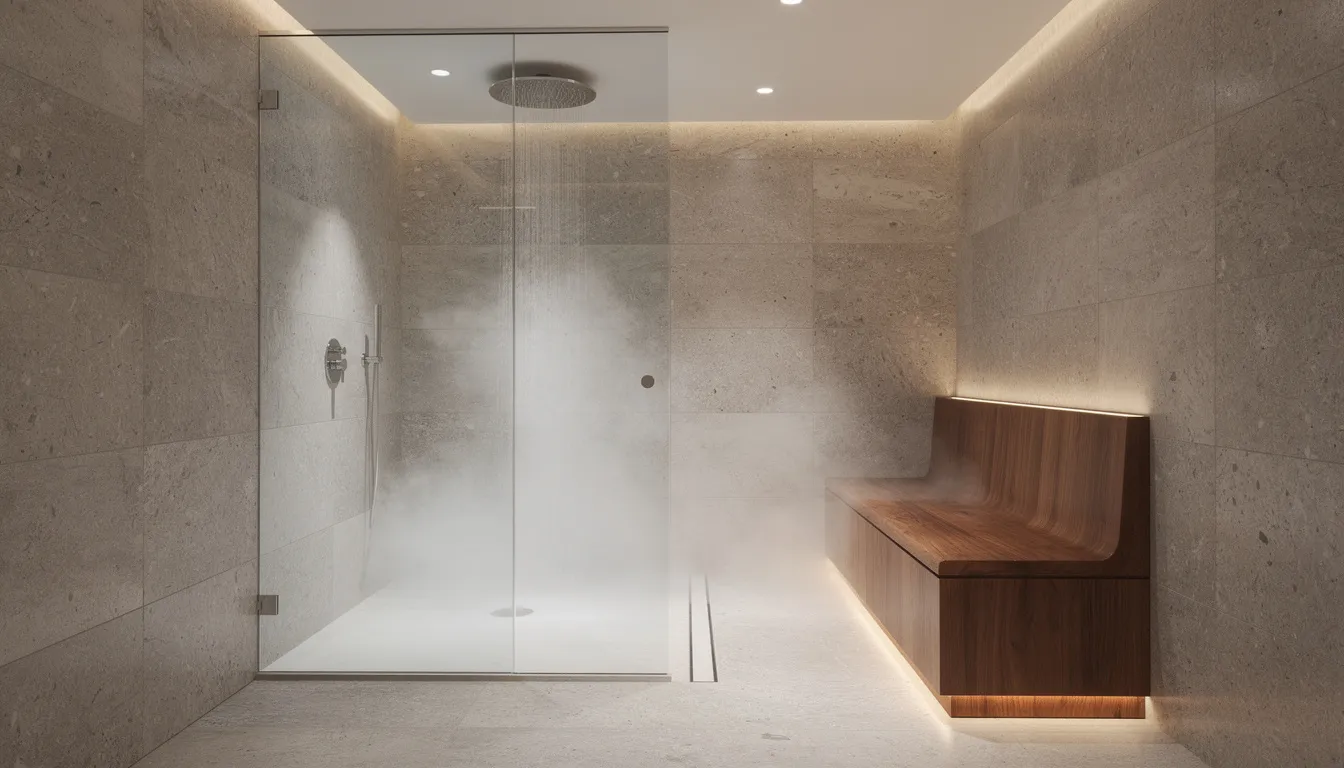
A steam shower is a fully enclosed, well-sealed shower equipped with a steam generator that produces moist heat at the touch of a digital control panel. Temperatures typically reach 110–120°F at near 100% humidity, creating an environment similar to professional spa steam rooms. For those seeking additional luxury wellness features, a sauna is another excellent option to consider for a spa-inspired bathroom, offering dry heat and unique relaxation and health benefits that complement the experience of a steam shower.
Core Benefits of Steam Showers
The steam shower benefits for wellness are significant:
- Muscle relaxation after intense workouts or physically demanding days
- Sinus relief during allergy seasons and cold weather months
- Improved circulation from the heat exposure
- Deep unwinding ritual before sleep, helping signal to your body that the day is done
How Traditional Showers Compare
Traditional showers remain quicker, less expensive to build, and easier to retrofit into a small bathroom. They’re practical for daily use when time is limited. However, they lack the slow, cocooning “spa session” quality that makes steam such a powerful relaxation tool. A traditional shower cleans you; a steam shower restores you.
Planning Your Steam Shower Remodel
If you’re considering adding steam to your bathroom, keep these planning points in mind:
- Ceiling design: Sloped ceilings prevent condensation drips from landing on you
- Materials: All surfaces must be moisture-resistant—porcelain, stone, or solid surface
- Ventilation: Include a transom or vent for rapid drying after sessions
- Seating: A built-in bench makes 15–20 minute steam sessions comfortable
- Budget: Expect $5,000–$15,000 depending on size and complexity
The smart approach is pairing a steam shower with a rain showerhead and handheld sprayer. This way, the same enclosure functions as both your daily-use shower and your spa-grade steam room. You get the best experience of both worlds without dedicating separate floor space to each.
If you have an existing walk-in shower, explore steam conversion when planning a 2026 bathroom update. Consult a licensed contractor familiar with steam generator sizing and local electrical codes before committing.
The Power of Soaking Tubs in a Spa Bathroom
While this article goes “beyond the bathtub,” a properly chosen soaking tub remains a cornerstone of wellness bathroom design. The key word is “properly chosen”—not every tub supports the deep relaxation a spa like retreat demands.
A soaking tub differs from a standard builder-grade tub in one critical dimension: depth. With 16–23 inches of water depth compared to the typical 12–14 inches, a soaking tub allows full-body submersion and a more meditative bathing experience. You’re not just sitting in water; you’re immersed in a warm bath that covers your shoulders.
Soaking Tub Styles to Consider
| Style | Best For | Key Features |
|---|---|---|
| Japanese-style | Compact spaces | Very deep, upright seating, small footprint |
| Freestanding elongated | Spacious rooms | Reclined position, sculptural presence, flexible placement |
| Built-in with ledges | Practical luxury | Surrounding shelf space for candles, books, bath trays |
Supporting Wellness Rituals
A soaking tub becomes a tool for specific wellness practices:
- Epsom salt soaks after intense workouts to ease muscle tension
- Warm baths 60–90 minutes before bed to improve sleep quality
- Screen-free time with a book, podcast, or guided meditation
- Weekly “reset” rituals that mark the transition from one week to the next
Layout and Practical Considerations
Position your tub thoughtfully. Under a window with privacy glass or exterior greenery creates an immediate connection to nature. If window placement isn’t possible, create a focal wall of stone tile or microcement behind the tub to establish a spa like backdrop that draws the eye.
Practical matters that often get overlooked:
- Structural support: Ensure your floor can handle the weight of a full tub plus occupant (potentially 1,000+ pounds)
- Flooring: Choose slip-resistant materials around the tub for safety
- Storage: Include a nearby niche or floating shelves for bath oils and towels
For those with a small bathroom, don’t force a standard tub into a tight space. Consider a compact Japanese soaking tub or skip the tub entirely in favor of a luxurious shower and steam experience. A well-designed shower-only bathroom can feel more spa like than a cramped room with an undersized tub.
Wet Room Layouts for a True Spa Feel
A wet room treats the shower and tub area as one fully waterproofed zone, similar to the bathroom design approach found in high-end European and Japanese spas. Instead of containing water in a separate stall, the room itself becomes the enclosure.
What a Wet Room Layout Looks Like
Typical wet room configurations include:
- Curbless walk-in shower that flows directly from the main floor
- Freestanding tub positioned within the same glass partition or open area
- No visual barriers between bathing zones and the rest of the room
- Linear drains integrated into the floor rather than central drains
Wellness Advantages
The spa like feel of a wet room comes from several factors:
- Seamless movement between shower, tub, and grooming areas
- Open sightlines that make even modest spaces feel less cramped
- Easier cleaning with fewer grout lines and no shower door tracks
- Immersive experience where water becomes a central element rather than something strictly contained
Accessibility is another major benefit. No curb to step over, space for a built-in bench, and enough turning radius for mobility aids make wet rooms ideal for aging-in-place planning.
Technical Planning Points
Wet room construction requires careful attention to:
- Full floor waterproofing with appropriate membranes
- Linear drains sized for your shower flow rate
- Consistent floor slope (typically 1/4 inch per foot) to guide water toward drains
- Floor reinforcement if you’re adding a heavy soaking tub
Aesthetic Choices for Maximum Impact
Amplify the spa atmosphere with:
- Large format tiles running floor to ceiling for visual continuity
- Frameless glass panels that maintain openness
- Minimalist palette avoiding fussy details and heavy trim
- Consistent materials throughout the wet zone
Wet rooms increase perceived luxury value by 40–50% in bathroom remodels according to design evaluations. They’re particularly well-suited for primary suites being renovated in 2025–2026. Smaller guest baths might opt for a partial-wet layout with just a single curbless shower rather than a full wet room conversion.
Chromotherapy & Mood Lighting for Daily Rituals
Chromotherapy uses colored light to influence mood and physiological responses. Modern spa bathrooms blend this therapeutic approach with layered ambient, task, and accent lighting to create spaces that adapt to your needs throughout the day.
Practical Chromotherapy Options
You don’t need a full renovation to introduce color therapy:
- LED light strips installed in recessed niches behind mirrors or under vanities
- Colored-light showerheads that cycle through hues
- Built-in ceiling lighting over the shower with preset color options
- Smart bulbs in existing fixtures that offer color temperature control
Research connects specific wavelengths to physiological responses: blues and greens for calm, warmer tones for energizing mornings. A simple blue-to-amber transition in your bathroom can support natural cortisol cycles.
The Three Layers of Bathroom Lighting
| Layer | Purpose | Examples |
|---|---|---|
| Task | Grooming accuracy | Bright, neutral-white vanity lighting |
| Ambient | Overall mood | Warm, dimmable overhead fixtures |
| Accent | Atmosphere and nighttime | Toe-kick strips, backlit mirrors, LED niches |
Supporting Mental Health Through Light
Layered lighting directly supports mental health and daily rhythms:
- Soft, dimmed light in the evening helps wind-down routines and melatonin production
- Brighter, cooler light in the morning signals wakefulness and improves focus
- Gradual transitions between modes feel more natural than harsh on/off switches
Include a master dimmer switch or smart controls so you can create “modes” like Morning, Unwind, and Spa Night with one tap or voice command. The ability to transform your bathroom mood instantly makes a big difference in how you use the space.
Safety and Style Notes
All fixtures in or near the shower and tub zones must be wet-rated. Have lighting upgrades installed by licensed electricians—bathroom electrical work isn’t a DIY project.
Styling touches that elevate the room:
- Small chandeliers or sculptural pendants visible from the tub
- Backlit mirrors that double as task lighting and decor
- Concealed LED strips under a floating vanity for a gentle spa like glow
Aromatherapy & Sound: Engaging All the Senses
A true wellness bathroom engages smell and sound alongside visual and tactile elements, mirroring the multisensory experiences found in high-end spas. Your senses don’t work in isolation, and your bathroom shouldn’t either.
Aromatherapy Integration Options
Several approaches work well in humid bathroom environments:
- Essential oil diffusers placed on a low shelf away from direct water
- Steam shower aromatherapy reservoirs that release scent with the steam
- Fresh eucalyptus bundles hung from the shower arm
- Quality candles arranged near the tub for evening baths
Scent Families for Different Rituals
| Goal | Recommended Scents |
|---|---|
| Relaxation and sleep | Lavender, chamomile, vanilla |
| Sinus clearing and recovery | Eucalyptus, peppermint, tea tree |
| Morning energy | Citrus, rosemary, grapefruit |
| Focus and grounding | Cedarwood, sandalwood, bergamot |
Fresh flowers on the vanity can also add natural fragrance while serving as beautiful decor—just refresh them weekly to maintain the effect.
Audio Integration
Sound completes the sensory experience:
- Moisture-resistant in-ceiling speakers for built-in audio
- Bluetooth speakers safely positioned away from splash zones
- Mirror cabinets with integrated speakers for guided meditations
- Waterproof speakers designed specifically for shower use
Create specific “soundscapes” for different activities: rain sounds during showers, ocean waves during baths, quiet piano or ambient music during morning routines. The right audio can transform an ordinary bath into a transportive experience.
Maintaining a Clean Aesthetic
Integrate aromatherapy and audio without cluttering your spa like vibe:
- Hidden outlets inside vanity drawers for diffusers
- Recessed niches sized for candles
- Control panels that blend into walls or mirrors
- Wireless speakers that can be stored when not in use
Biophilic Design: Stone, Wood, and Plants
Biophilic design brings nature indoors through natural materials, organic forms, and living plant life. This approach is central to spa bathroom ideas in 2025–2026 because it taps into our evolutionary connection to natural environments. Research suggests biophilic elements can reduce perceived stress by up to 60% through visual and tactile cues alone.
Organic Materials to Consider
For your floor, walls, and surfaces:
- Honed limestone or travertine tiles with natural veining
- Pebble mosaic floors in shower areas
- Quartz countertops with subtle movement and color variation
- Slate accent walls with natural texture
- Marble tiles in classic Carrara or Calacatta patterns
For warmth and contrast:
- Light oak or walnut vanity cabinets with visible grain
- Teak benches and bath accessories
- Bamboo accents for an Eastern-influenced style
- Natural fiber baskets and textiles
Moisture-Friendly Wood Solutions
Wood in humid environments requires proper treatment:
- Sealed teak naturally resists moisture and ages beautifully
- Thermo-treated ash handles humidity without warping
- Marine-grade finishes on any wood details
- Proper ventilation to prevent prolonged moisture exposure
Plants That Thrive in Steamy Bathrooms
Add life to your space with humidity-loving species:
- Ferns (Boston fern, bird’s nest fern)
- Philodendrons and pothos for trailing greenery
- Peace lilies for low-light bathrooms
- Orchids for elegant blooms on vanity surfaces
- Air plants (tillandsias) that need no soil
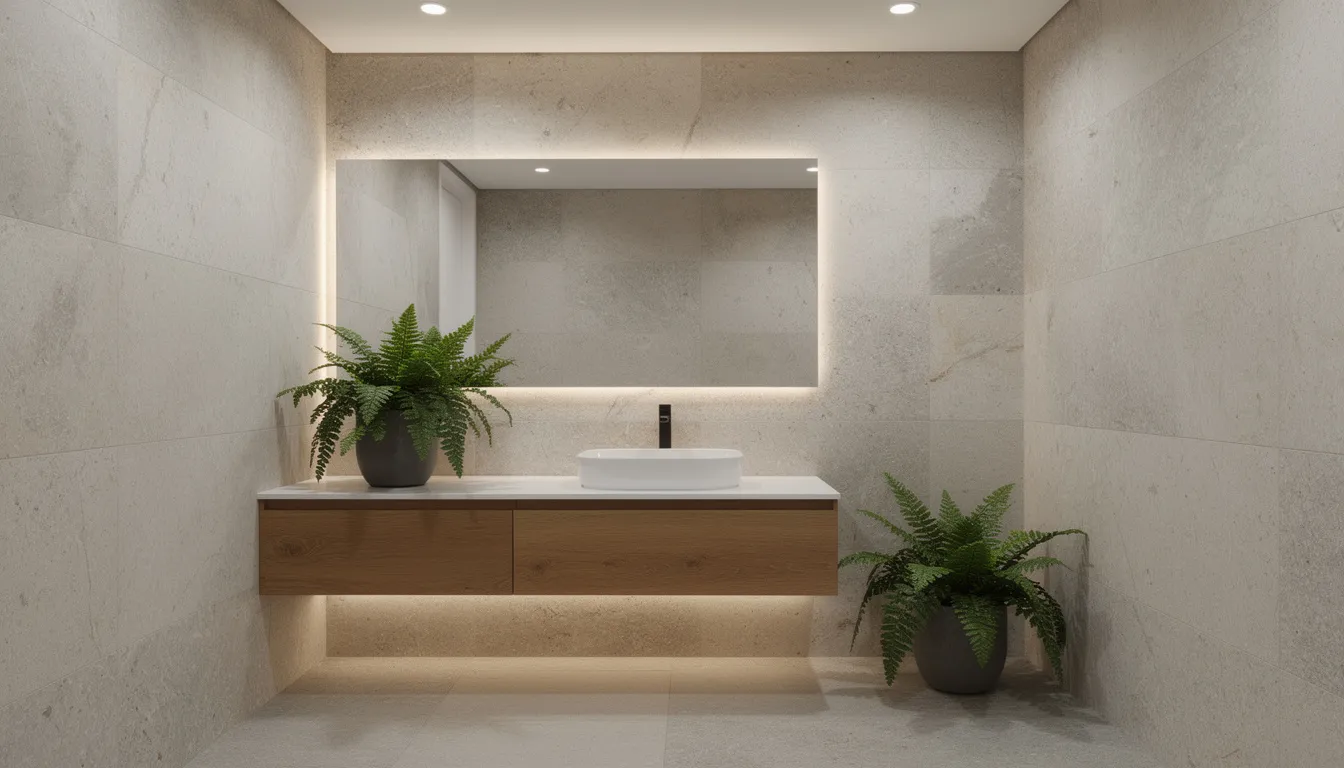
Position plants on floating shelves, windowsills, or suspended from ceiling hooks near natural light sources.
Visual Strategies for Nature Connection
If you can’t add windows or views to gardens, create the feeling through:
- Nature-inspired art or photography on walls
- Earth-tone color schemes drawn from sand, stone, and foliage
- Textured surfaces that invite touch
- Water features like small tabletop fountains
Stone and wood textures pair beautifully with simple white fixtures. Avoid overly busy patterns that distract from the calm you’re trying to create. Even in a small powder room or windowless space, a single living plant plus a stone stool or teak bath mat can meaningfully shift the feel toward spa like calm.
Planning the Layout: Zones for Relaxation and Flow
A wellness bathroom should be organized into distinct zones—bathing, showering, vanity/grooming, and relaxation—to support different rituals without clutter or crowding. This zoning approach is what separates thoughtful design from random fixture placement.
Creating Wet and Dry Zones
Separate your bathroom into humidity zones:
- Wet zone: Shower, steam area, and tub clustered together
- Transition zone: Space between wet and dry for toweling off
- Dry zone: Vanity, double vanity if space allows, and storage
This separation protects products and linens from humidity exposure while maintaining an open feel throughout the room.
Priority Sightlines
What you see first matters. Place your most relaxing feature—whether that’s a soaking tub, a beautiful window, or a feature wall—directly opposite the entry. The space should feel calm on first glance, not busy with visible toilets or cluttered counters.
If you have extra space, consider a dedicated relaxation corner:
- Teak bench with folded towels
- Small table with a carafe of water and a book
- Comfortable chair near a window for post-bath cooling
- A connection to the adjacent bedroom for a suite-like flow
Circulation and Flow
Ensure smooth movement throughout the space:
- Adequate clearance to move between vanity, shower, and tub without bumping corners
- Door swings and glass panels that don’t interrupt traffic patterns
- A pathway that feels intuitive rather than maze-like
Zoning Through Materials
Use materials strategically to signal different areas while maintaining visual continuity:
- One continuous floor material keeps things spacious and cohesive
- Subtle shifts—like a change in tile direction or a bath rug—indicate activity zones
- Consistent ceiling treatment unifies the room
- Wall material changes (stone accent behind tub, painted walls at vanity) create focal points
Always follow basic safety and accessibility guidelines: non-slip surfaces throughout, proper clearances for mobility, and adequate lighting at each zone.
Materials, Colors, and Finishes that Feel Like a Spa
Spa bathroom ideas rely on a restrained palette and tactile materials rather than flashy trends. The goal is longevity and sensory comfort—finishes that look and feel luxurious for years, not just in photos.
Color Families That Work
Build your color scheme from these spa-appropriate palettes:
| Palette | Primary Colors | Accent Options |
|---|---|---|
| Warm neutral | Soft whites, warm beiges, creamy ivory | Walnut, brass |
| Cool neutral | Greige, pale grey, soft white | Matte black, chrome |
| Nature-inspired | Sage green, muted blue, sand | Charcoal, bronze |
| Earth tones | Terracotta, clay, warm brown | Cream, aged brass |
Tactile Finishes for Comfort
Choose finishes you’ll enjoy touching:
- Honed or matte stone tiles rather than high-gloss
- Linen-textured wallcoverings in powder rooms or dry areas
- Woven baskets and stools to soften hard surfaces
- Plush textiles in organic cotton or bamboo
Fixture and Hardware Selection
Keep fixtures streamlined and visually quiet:
- Faucets in brushed nickel, brushed brass, or matte black
- Simple shapes that are easy to clean
- Consistent metal finishes throughout, or a deliberately coordinated mix
- Slim-profile cabinet fronts with concealed hardware
Details That Add Discrete Luxury
The finishing touches that elevate your space:
- Solid-surface shower niches with no visible grout
- Integrated towel warmers
- Minimal-framed or frameless mirrors
- Flush-mount ceiling fixtures
- Quality window treatments that provide privacy without blocking natural light
For heavy-use areas, choose durable, low-maintenance materials like porcelain tile instead of high-maintenance marble. Materials that age gracefully with less upkeep help maintain a calm environment—nothing kills spa vibes faster than stress about staining or constant cleaning.
Storage, Organization, and “Little Spa Details”
Clutter is the enemy of a spa like atmosphere. All the stylish design choices in the world won’t help if your counters are covered in product bottles and your drawers overflow with forgotten accessories. Storage and organization are essential to sustaining the wellness vibe long term.
Storage Strategies That Work
Invest in storage that hides the mess:
- Deep vanity drawers with dividers and organizers for cosmetics
- Recessed medicine cabinets that keep daily items accessible but hidden
- Built-in shower niches sized for full-size bottles (not those tiny builder-grade slots)
- Closed cabinets for cleaning supplies, extra toilet paper, and backup products
- Linen closets or bathroom armoires for towels and robes
Creating a Spa Display
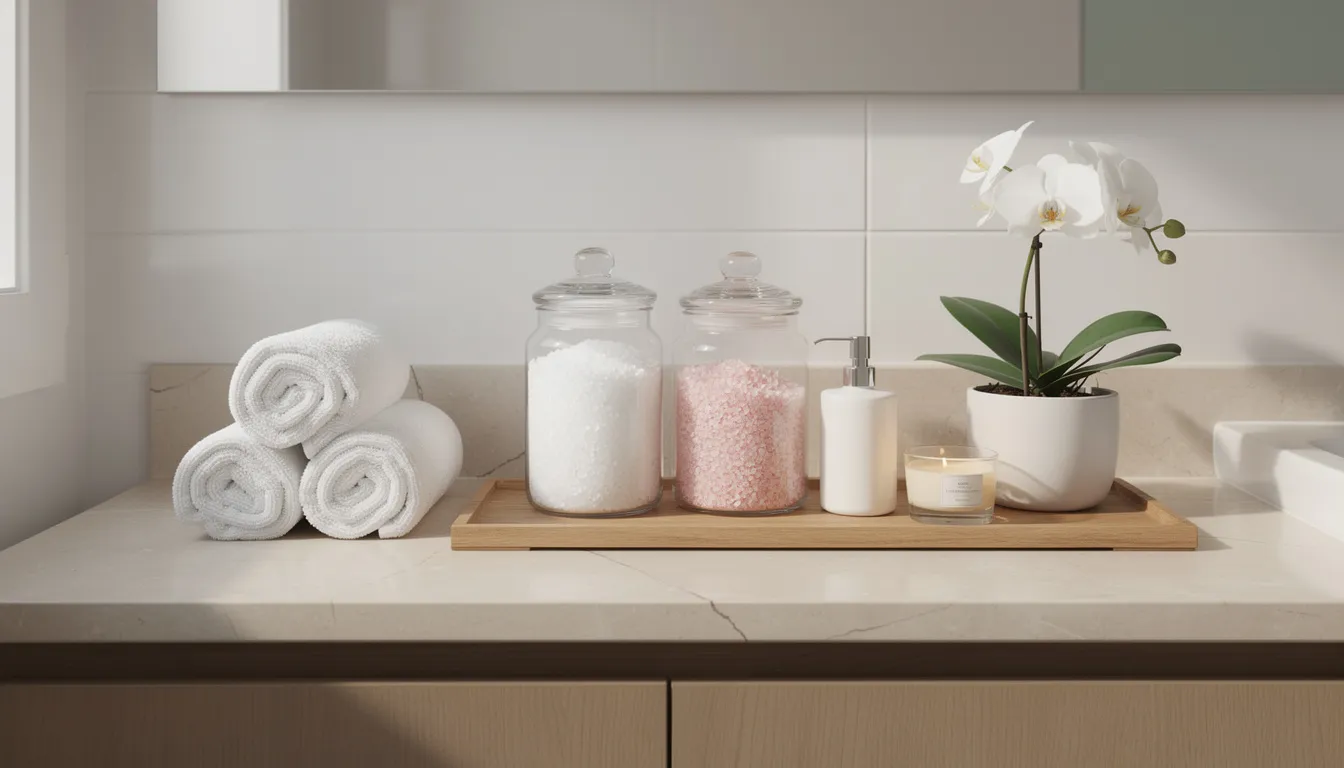
Designate a “spa cart” or shelf with curated items:
- Rolled towels in a neat stack or basket
- Bath salts in a glass jar
- Facial masks and treatments
- A small plant or fresh flowers
- A beautiful tray to corral items
This hotel-like presentation near the tub or shower reinforces the spa experience every time you enter the room.
Visual Calm Through Consistency
Reduce visual noise by decanting everyday products into uniform, reusable containers with simple labels. Your shampoo bottle’s bright label doesn’t belong in a spa retreat. Keep the space looking cozy and curated rather than cluttered and commercial.
Small Upgrades with Big Impact
These accessories and finishing touches feel luxurious without requiring a full renovation:
- Soft cotton or bamboo towels in neutral tones
- Plush robes on wall hooks
- Teak or stone bath stools
- High-quality bath mats or woven rugs
- A dressing table area with proper lighting if you have a spacious room
Smart but Discreet Tech
Include technology that enhances comfort without disrupting the serene look:
- Motion-sensor night lights in toe-kicks
- Heated towel bars for that warm-towel-after-shower luxury
- Hands-free faucets that add cleanliness and convenience
- Speakers hidden behind mirror panels
Real-Life Application
Set up rituals that use your spa space intentionally. A Sunday evening routine might include:
- Herbal tea in a ceramic mug on the tub ledge
- A face mask from your curated shelf
- A book or podcast
- Candles lit around the room
- Dim, warm lighting and relaxing music
The point is to actually use the space you’ve created—not just admire it. Keep everything tidy and ready so stepping into your bathroom feels like checking into a spa, not another room to clean.
Bringing It All Together: Your 2026 Wellness Bathroom Plan
A spa-inspired wellness bathroom integrates upgraded showers or steam systems, thoughtful tub choices, chromotherapy, aromatherapy, biophilic natural materials, and intentional layouts. It’s not about one feature—it’s about how everything works together to support your life and wellbeing.
Your Phased Approach
| Timeline | Project Type | Examples |
|---|---|---|
| Next 30 days | Quick updates | Add plants, install dimmers, upgrade towels and textiles, declutter counters |
| 6–12 months | Medium projects | New fixtures, partial tile refresh, lighting upgrades, storage solutions |
| 2026 renovation | Major remodel | Wet room layout, steam shower, structural changes, full redesign |
Start With Your Primary Goal
Before making any changes, identify what you actually need from your bathroom inspiration:
- Stress relief → Focus on lighting, aromatherapy, and sensory materials
- Better sleep → Prioritize warm baths, dimming capability, and evening rituals
- Post-workout recovery → Steam shower, soaking tub, and temperature control
- All of the above → Full renovation with integrated systems
Your design should support your actual wellness needs, not just look good in photos.
Keep a Wellness Mood Board
Collect images of colors, materials, and fixtures that evoke your favorite hotel spa or travel memory. This becomes your guiding reference for every decision, helping you avoid impulse buys that don’t fit your vision. Focus on what makes you feel calm and restored, not what’s trending this season.
The Perfect Balance
With intentional design and a focus on sensory experience, any bathroom—from a compact city apartment to a large primary suite—can become a personal wellness retreat at home. You don’t need unlimited budget or endless space. You need clarity about what matters to you and the willingness to make thoughtful choices.
Start with one quick win this week. Maybe it’s finally adding that plant you’ve been considering, or ordering a dimmer switch, or clearing the clutter from your vanity. Small changes create momentum, and momentum leads to transformation.
Your own home deserves a space where you can truly recover, reset, and step back into your life feeling restored. That space can be your bathroom—and now you know how to create it.
