
Kitchen remodeling represents one of the most impactful changes you can make to your home, transforming both daily functionality and long-term property value. Whether you’re working with an outdated galley layout or simply want to create a space that better reflects how your family actually cooks and entertains guests, understanding the complete remodeling process is essential before you begin.
This guide covers comprehensive kitchen renovations from initial planning through final touches, including layout changes, cabinet installation, appliance selection, and finishing materials. We focus on major remodeling projects rather than minor updates like painting or hardware swaps. If you’re a homeowner planning a significant kitchen transformation—especially if this is your first major renovation—this resource will help you navigate decisions, avoid common pitfalls, and work effectively with contractors.
Direct answer: Average kitchen remodel costs range from $27,000 to $82,000, with projects typically taking 3-6 months to complete. The entire project involves layout reconfiguration, new cabinets, appliances, countertops, flooring, and finishes that work together to create your dream kitchen.
By the end of this guide, you’ll understand:
- The complete kitchen remodeling process from planning to completion
- How to create a realistic budget with appropriate contingencies
- Timeline expectations for each project phase
- Material and appliance selection strategies
- Project management techniques that prevent costly delays
Understanding Kitchen Remodeling Fundamentals
Kitchen remodeling involves substantial changes to your home’s kitchen, including layout modifications, new kitchen cabinets, updated appliances, and replacement of major surfaces like countertops and flooring. This differs from a kitchen renovation (which typically preserves the existing layout while upgrading components) or a simple refresh (paint, hardware, and decorative changes only).
Understanding these distinctions matters because they dramatically affect your budget, timeline, and contractor requirements. A full remodel is a popular home improvement project because it delivers both lifestyle improvements and strong return on investment—typically recovering 60-80% of costs at resale while improving how you use your space every day.

Types of Kitchen Remodeling Projects
Minor remodels ($15,000-$35,000) focus on cosmetic and functional upgrades without changing the room’s footprint. These projects typically include painted cabinets or cabinet refacing, new appliances, updated countertops, tile backsplash installation, and new flooring. Most homeowners choose this approach when the existing layout works well but materials show their age.
Major remodels ($50,000-$100,000) involve significant changes including layout reconfiguration, custom cabinets, complete appliance replacement with large appliances like professional-grade ranges, and structural modifications. This level addresses fundamental workflow issues and creates opportunities for features like a kitchen island or expanded storage.
Luxury remodels ($100,000+) encompass custom everything: bespoke cabinetry, premium materials like granite or quartzite countertops, high-end energy efficient appliances, and often structural changes including wall removal or room expansion. These projects create truly personalized spaces reflecting specific cooking styles and entertaining needs.
Your budget, timeline tolerance, and how long you plan to stay in your house should guide which level fits your situation.
Key Components of Kitchen Remodeling
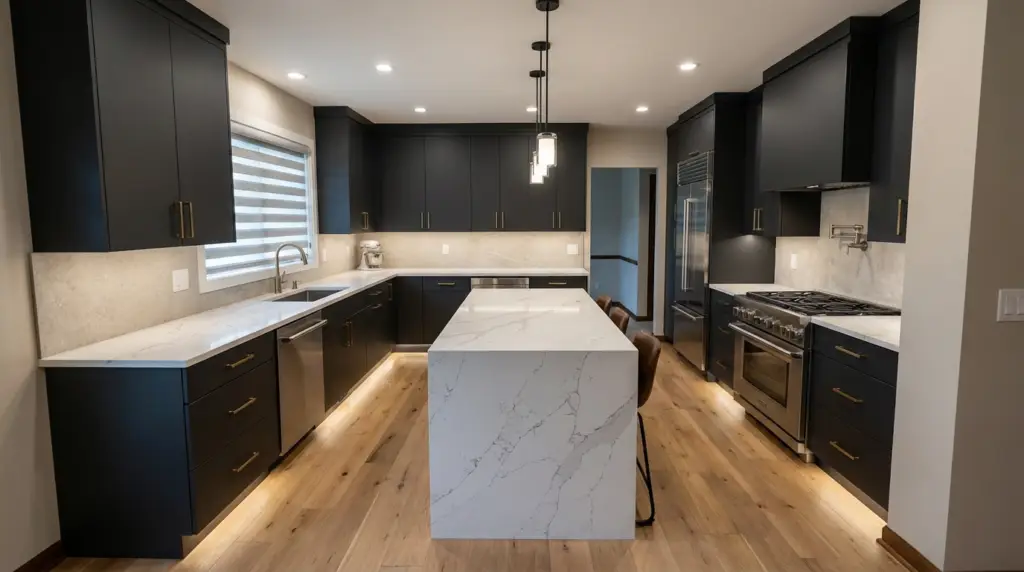
Layout and space planning establishes the foundation for everything else. The classic work triangle—positioning your sink, stove, and refrigerator for efficient movement—remains relevant, though modern designs often incorporate zones for specific activities like food prep, cooking, and cleanup.
Cabinet systems consume the largest portion of most kitchen remodel costs, typically 25-35% of the total budget. Options range from stock cabinets (affordable, limited customization) to semi-custom and full custom cabinets (maximum flexibility for unique spaces).
Appliance selection and placement affects both daily functionality and utility requirements. Energy efficient appliances reduce long-term operating costs while modern features like induction cooking offer precision and safety improvements.
Countertops, flooring, and finishing materials complete the visual design while providing durable work surfaces. Material choices here significantly impact both aesthetics and maintenance requirements for years to come.
Understanding these components helps you communicate effectively with potential contractors and make informed trade-off decisions as your project develops.
The Kitchen Remodeling Process
With fundamentals established, let’s examine the step-by-step progression that moves your kitchen remodel project from concept to completion.
Planning and Design Phase
The planning phase typically spans 4-8 weeks and establishes the framework for everything that follows. Initial consultations involve documenting your current kitchen’s accurate measurements—ceiling height, window placements, door locations, and utility positions—while discussing your functional priorities and kitchen design ideas.
Design development transforms those conversations into detailed plans. You’ll review kitchen layouts, select materials, choose appliances, and finalize the scope. This is when kitchen decorating ideas become concrete decisions about cabinet styles, countertop materials, and finish palettes. Natural wood finishes and warm tones currently lead design trends, creating spaces that feel inviting rather than clinical.
Permit requirements vary significantly by location and project scope. Any work involving plumbing, electrical modifications, or structural changes typically requires permits and inspections. Review local requirements early—approval processes can add 2-4 weeks to your timeline.
Pre-Construction Preparation
With designs finalized, contractor selection becomes the priority. Request detailed written estimates from multiple potential contractors, verify licensing and insurance, and check references from recent kitchen projects. Document selection criteria and timeline commitments in your contract.
Material ordering must happen well before construction begins. Cabinets often require 4-8 weeks for manufacturing; countertops need fabrication time after templating; and specialty appliances may have extended delivery windows. Coordinate delivery scheduling with your contractor to prevent installation delays.
Establish your temporary kitchen before demolition begins. Set up a mini fridge, microwave, and essential appliances in another room. Stock paper plates and disposable utensils. Plan your food preparation strategy—whether that means simple meals, increased dining out, or creative use of slow cookers and countertop appliances. Most homeowners underestimate how disruptive losing kitchen access feels, so realistic planning here prevents frustration.
Permits and Inspections
Before you dive into your kitchen remodel project, securing the right permits and scheduling inspections is a crucial step that ensures your new kitchen meets all local building codes and safety standards. While it might seem like just another item on your to-do list, proper permitting protects your investment, helps avoid costly mistakes, and is often required for resale or insurance purposes.
Understanding Permit Costs and Process
The cost of permits is typically a small fraction of your overall kitchen remodel costs—ranging from $500 to $2,000 depending on your location and the complexity of your project. For context, the average kitchen remodel costs around $28,500 for a minor remodel, so permit fees are a relatively minor but essential expense.
To get started, you’ll need to submit your kitchen design plans to your local building department. These plans should include accurate measurements, your intended kitchen layout, and details about new appliances, cabinets, plumbing, and electrical work. The review process ensures your remodel complies with local codes for safety, energy efficiency, and structural integrity.
Key Inspections During Your Remodel
Once your permit is approved, you can begin construction. Throughout the remodel, you’ll need to schedule several inspections at key milestones:
- Electrical inspections: Verifying that wiring for new appliances, lighting, and outlets is installed safely and up to code.
- Plumbing inspections: Ensuring your new sink, dishwasher, and any relocated plumbing lines are properly installed and leak-free.
- Structural inspections: Checking that any changes to kitchen walls, ceilings, or floors meet safety standards and won’t compromise your home’s structure.
Passing these inspections is essential before moving on to the next phase of your kitchen remodel project. Failing to do so can result in costly rework or delays, so it’s wise to work with a licensed contractor who understands the local permitting process and can coordinate inspections efficiently.
Incorporating Design and Functionality
While navigating permits and inspections, you can still focus on kitchen decorating ideas that enhance both style and function. For example:
- Choose energy efficient appliances to reduce long-term costs and meet code requirements.
- Opt for painted cabinets or custom drawer fronts to add personality without compromising compliance.
- Install a tile backsplash to protect kitchen walls and add visual interest.
- Consider a galley layout or other functional kitchen layouts that maximize your available space and workflow.
Practical Tips for a Smooth Process
- Set up a temporary kitchen with a mini fridge, microwave, and paper plates to keep your household running smoothly during construction.
- Keep all permit documents and inspection records organized and accessible for your contractor and inspectors.
- Communicate regularly with your contractor to stay informed about upcoming inspections and any required adjustments.
By prioritizing permits and inspections early in your kitchen remodel project, you’ll ensure your new kitchen is not only beautiful and functional but also safe, legal, and built to last. With careful planning, attention to detail, and the right professional support, you’ll be well on your way to creating your dream kitchen and enjoying countless hours of cooking, entertaining, and making memories in your new space.
Construction and Installation
Demolition and structural work phases launch the physical transformation. Existing cabinets, countertops, appliances, and sometimes walls come out. Any structural modifications—removing load-bearing walls, adding windows, or relocating doors—happen during this phase.
Utility rough-in follows demolition. Electrical wiring, plumbing relocations, and HVAC modifications occur before walls close up. Inspections verify code compliance at this stage—a critical checkpoint that must pass before proceeding.
Installation sequence matters for efficiency. Work generally progresses from structural elements outward: framing completion, then drywall installation, paint, flooring, cabinets, countertops, and finally appliances and fixtures. Disrupting this sequence causes rework and delays.
Timeline expectations: Minor remodels typically complete in 4-8 weeks. Major remodels run 10-16 weeks. Luxury projects with custom elements may extend beyond 6 months. Building buffer time into your schedule accounts for inevitable surprises.
Kitchen Remodeling Implementation and Costs
Building on the process overview, let’s examine the practical execution sequence and associated costs that shape your entire project.
Step-by-Step Remodeling Procedure
Follow this sequence for efficient execution:
- Demolition and site preparation – Remove existing cabinets, countertops, appliances, and flooring. Protect adjacent rooms from dust and debris. Typically 2-5 days depending on project scope.
- Structural and utility rough-in work – Complete any wall modifications, relocate plumbing and electrical as needed, and install new wiring for appliances. Schedule required inspections. Duration: 1-2 weeks.
- Install drywall, insulation, and paint – Close up walls, apply primer and paint to kitchen walls and ceiling. Complete before cabinet installation to prevent damage to finished cabinetry. Duration: 1-2 weeks.
- Flooring installation – Install new flooring throughout the space. Most contractors prefer installing before cabinets for cleaner transitions, though some project specifications vary. Duration: 2-5 days.
- Cabinet installation and trim work – Install base and wall cabinets, drawer fronts, doors, and all trim elements. This phase transforms the room’s appearance dramatically. Duration: 3-7 days.
- Countertop templating and installation – After cabinets are installed, countertop fabricators create templates for precise fitting. Fabrication requires 1-2 weeks, followed by installation day. Plan accordingly for this gap.
- Appliance installation and connections – Install and connect all kitchen appliances including refrigerator, stove, dishwasher, and any additional features. Duration: 1-2 days.
- Final finishes and cleanup – Install backsplash, complete fixture installation, touch up paint, and address the punch list of remaining details. Cross the finish line with attention to these final touches. Duration: 3-7 days.
Cost Comparison by Remodel Type
| Criterion | Minor Remodel | Major Remodel | Luxury Remodel |
|---|---|---|---|
| Budget Range | $15,000-$35,000 | $50,000-$100,000 | $100,000+ |
| Timeline | 4-8 weeks | 10-16 weeks | 4-8 months |
| Cabinet Type | Refaced/Painted | Semi-custom | Full custom cabinets |
| Appliances | Standard replacement | Mid-range upgrade | Professional-grade |
| Countertops | Laminate/Solid surface | Granite/Quartz | Premium stone/Custom |
| Typical ROI | 75-85% | 60-75% | 50-65% |
When choosing your remodel level, consider how long you’ll remain in the home, your available budget (including contingency), and which improvements deliver the functionality you need most. Average kitchen remodel costs fall in the major remodel category for most homeowners, but the right choice depends on your specific situation and goals.
Understanding these costs helps you shop for materials and appliances strategically, allocating money where it matters most for your priorities.
Common Kitchen Remodeling Challenges and Solutions
Even well-planned kitchen remodel projects encounter obstacles. Recognizing common challenges in advance helps you navigate them effectively.
Budget Overruns and Scope Creep
The most frequent problem homeowners face is spending beyond their planned budget, often triggered by mid-project changes or unexpected discoveries.
Solution: Establish a 15-20% contingency fund from the start and commit to your original plan. Get detailed written estimates covering all anticipated work, and establish a formal change order process before signing any contract. When temptation strikes to upgrade materials or expand scope, evaluate whether the cost aligns with your priorities—and fund it from contingency if you proceed.
Timeline Delays and Disruptions
Material delays, inspection scheduling, and contractor coordination commonly extend project timelines beyond initial estimates.
Solution: Build buffer time into your schedule—add 20-30% to contractor estimates. Order materials with long lead times immediately after design finalization. Coordinate delivery windows precisely with your contractor to prevent waiting periods. Maintain regular communication to identify potential delays before they cascade into major disruptions.
Living Without a Kitchen
Spending countless hours without access to a functional kitchen challenges even the most patient homeowners. The disruption affects meal preparation, family routines, and overall household stress.
Solution: Set up a functional temporary kitchen with a mini fridge, microwave, toaster oven, and electric kettle. Stock paper plates and disposable utensils to minimize washing in bathroom sinks. Create meal plans emphasizing simple preparation: sandwiches, salads, rotisserie chickens, and one-pot meals that require minimal equipment. Budget for increased dining out—it’s a legitimate project cost.
Contractor and Communication Issues
Miscommunication about expectations, timeline, or specifications derails projects and damages relationships with contractors.
Solution: Establish clear communication protocols at project start: weekly update meetings, preferred contact methods, and response time expectations. Document all decisions and changes in writing—email confirmations create records that prevent misunderstandings. Address concerns immediately rather than allowing frustration to build. USA Home Pros certified contractors understand these communication standards and can guide you through effective collaboration.
Anticipating these challenges transforms them from crises into manageable situations.

Conclusion and Next Steps
Successful kitchen remodeling requires thorough planning, realistic budget allocation including appropriate contingencies, and effective collaboration with qualified professionals. Whether you’re pursuing a minor upgrade or complete transformation of your entire kitchen, the process rewards homeowners who invest time in understanding each phase before construction begins.
Your new kitchen represents both an investment in daily quality of life and in your home’s long-term value. The space where you prepare food, gather with family, and entertain guests deserves careful attention to both functionality and design.
Immediate next steps:
- Assess your current kitchen’s strengths and limitations—document what works and what frustrates you
- Establish a preliminary budget range based on your remodel type and regional cost data
- Research USA Home Pros certified contractors in your area who specialize in kitchen renovation projects
- Begin collecting kitchen ideas and inspiration that reflect your personal style and functional needs
For homeowners considering broader improvements, bathroom remodeling, home additions, and whole-house renovations often complement kitchen projects—and may offer cost efficiencies when coordinated together.

Additional Resources
USA Home Pros contractor directory – Access vetted, certified professionals specializing in kitchen remodel projects across all budget levels
Kitchen remodeling timeline templates – Downloadable planning tools that help you track milestones and coordinate with contractors
Budget worksheets – Comprehensive spreadsheets covering all cost categories with regional adjustment factors
Material selection guides – Detailed comparisons of cabinet materials, countertop options, and appliance categories to inform your decisions
Permit requirement checklists – State and locality-specific guides to help you understand approval requirements before starting work
