
Introduction to Smart Bathroom Design
Bathroom design has undergone a remarkable transformation, evolving from a purely utilitarian space into a personal sanctuary that blends comfort, luxury, and smart technology. Today’s dream bathroom is more than just a place to get ready—it’s a retreat where you can unwind, recharge, and enjoy a spa-like atmosphere every day. With the integration of smart toilets, digital faucets, and heated floors, modern bathroom design is redefining what’s possible in both function and style.
A well-designed bathroom takes into account not only aesthetics but also energy efficiency, hygiene, and the overall bathroom experience. Smart technology now allows homeowners to personalize everything from water temperature to lighting, making daily routines more enjoyable and efficient. Features like heated floors add a touch of everyday luxury, while digital faucets and smart toilets enhance cleanliness and reduce water waste.
When planning your ideal bathroom, it’s important to consider elements such as lighting, ventilation, and storage to ensure the space is both beautiful and practical. Working with a bathroom designer can help you navigate the latest trends and technologies, ensuring your new bathroom meets your unique needs and preferences. Whether you’re updating a small bathroom or creating a master suite, thoughtful bathroom design can turn any space into a haven of relaxation and innovation.
Smart Bathroom Technology in 2026: What Homeowners Really Want
The bathroom has come a long way since the early 2020s. What started as scattered smart bathroom gadgets—a touchless faucet here, a Bluetooth speaker there—has evolved into fully integrated ecosystems where every fixture works together. Smart tech now brings together these advanced features, creating a seamless and cohesive bathroom experience. The post-pandemic years accelerated this shift dramatically, with many homeowners prioritizing hygiene, wellness, and hands-free operation in ways that weren’t on most people’s radar before 2020.
By 2026, four search-driven features dominate what homeowners are researching: digital shower controls, smart mirrors, heated floors, and voice-activated showers. According to the National Kitchen & Bath Association’s 2026 Bath Trends Report, which surveyed nearly 700 industry experts, 87% expect Gen Z homeowners to embrace AI-driven bathroom features alongside eco-friendly materials. But it’s not just younger buyers—demand for smart technology spans generations as people recognize the comfort and efficiency these upgrades deliver.
The good news? These upgrades aren’t limited to gut renovations. While some features work best when planned into a full remodel, others—like smart mirrors or retrofit bidet seats—can transform your daily routine in a weekend project. Whether you’re designing your dream bathroom from scratch or phasing in improvements over time, understanding what’s available in 2026 gives you a roadmap to a bathroom experience that’s both luxurious and practical.
Digital Shower Controls: Precise, Personalized, and Water-Saving
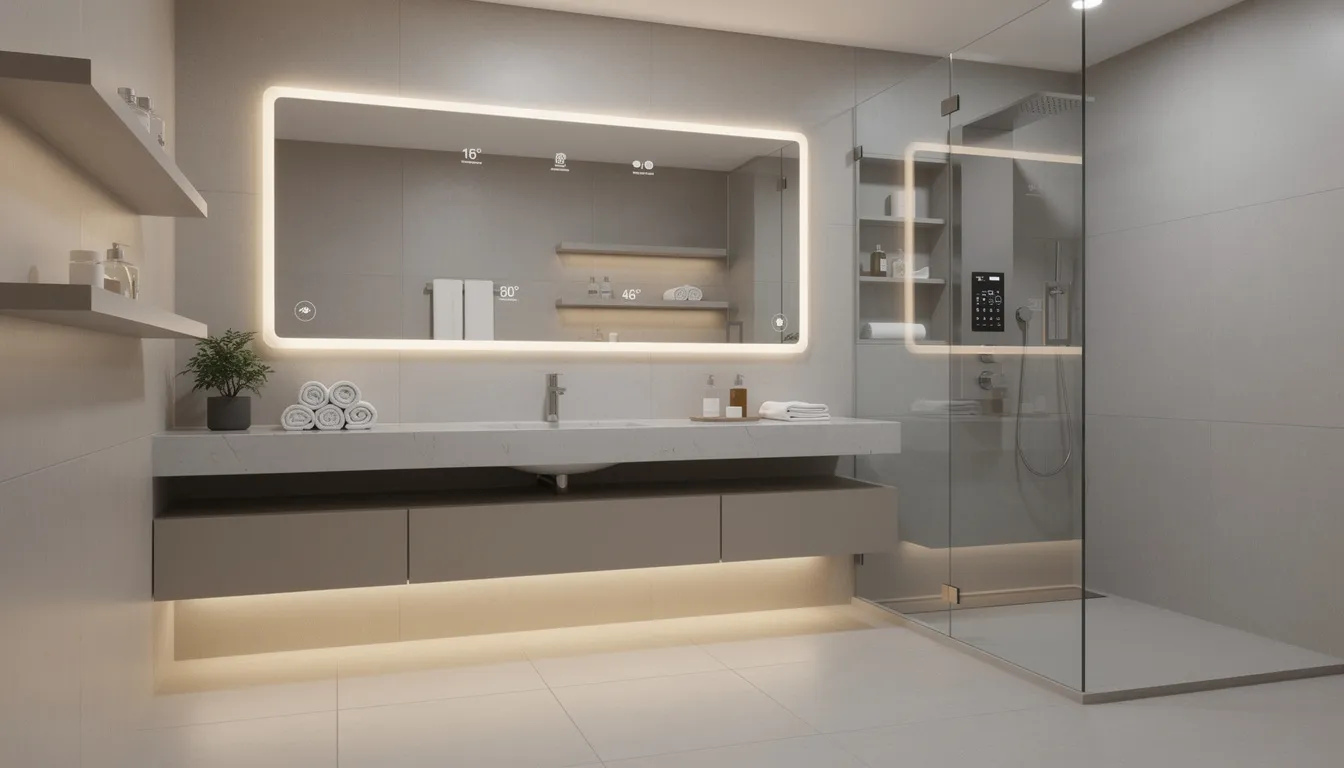
Digital shower systems have moved from luxury hotels into residential bathrooms, and by 2026, they’ve become a cornerstone of modern bathroom design. These systems typically combine a wall-mounted control panel, smartphone app connectivity, and integration with smart home systems like Alexa, Google Assistant, or Apple Home. The result is a shower that knows exactly what you want before you step in.
The appeal goes beyond novelty. Homeowners can pre-set profiles for temperature, pressure, and duration—imagine a “6:45 a.m. Workday Shower” preset that automatically brings your shower to your desired temperature of 102°F and runs for exactly 8 minutes. Systems from manufacturers like Moen let you warm water remotely from your phone, so it’s ready the moment you walk in. Many include pause functions that hold your settings while you lather, eliminating the frustration of re-adjusting when you rinse.
Water-saving benefits make the investment easier to justify. Many digital shower systems cut wasted warm-up water by 30–40% by pausing flow once the temperature stabilizes. High-efficiency models certified by WaterSense can reduce water consumption by up to 50% compared to standard showers, directly impacting your water bills and environmental footprint. For a household running multiple showers daily, the long term savings add up quickly. Enhanced temperature control in these systems not only improves comfort but also increases safety by preventing accidental scalding or sudden cold bursts.
Installation considerations vary based on your situation. Digital valves are ideal for gut remodels where you’re opening walls anyway, but some retrofit control panels can be added to existing shower systems. Discuss options with your plumber early—adding convenience through smart shower controls often requires planning for low-voltage wiring and dedicated circuits. Integrating digital controls into a walk in shower can further modernize your bathroom, offering both accessibility and a seamless, high-tech experience.
Key Benefits: Comfort, Control, Conservation
- Eliminate cold starts and temperature guessing
- Create personalized profiles for each family member
- Reduce water waste with timed pauses and flow limits
- Integrate with existing smart home systems for seamless control
Voice-Activated Showers: Hands-Free Comfort and Safety
Voice-activated shower control takes digital technology one step further, replacing buttons and touchscreens with simple voice commands. Instead of tapping a panel or pulling out your phone, you simply say “Start my evening shower” and the system activates your saved profile. In 2026, systems from Moen and Kohler feature far-field recognition that works even in steamy, echo-prone tiled spaces.
The safety benefits are significant. For households with children, older adults, or anyone with mobility challenges, voice activation eliminates the need to reach for controls or adjust slippery handles. You can cap maximum water temperature to prevent scalding and program automatic shutoff after a set duration. This makes voice-activated systems particularly valuable for aging-in-place designs where safety and independence matter.
There’s a hygiene advantage too. Keeping hands off controls when they’re soapy or dirty means fewer germs transferred to surfaces. For families where morning routines involve multiple people cycling through the bathroom, touchless operation keeps the space cleaner with less effort.
Ideal For:
- Families with children who need temperature limits
- Multi-user households with different preferences
- Aging-in-place designs prioritizing safety
- Anyone who values hands free operation and minimal cleaning
Smart Mirrors: Lighting, Anti-Fog, and Built-In Intelligence
Think of smart mirrors as the command center of your 2026 bathroom. These mirrors do far more than reflect—they combine perfect lighting, media playback, and useful information into a single sleek surface that elevates your morning routines.
Integrated lighting sits at the core of what makes these mirrors valuable. Most 2026 models offer pre-set modes like “Daylight,” “Soft Evening,” and “Makeup” with adjustable color temperature ranges from warm 2700K to cool 6500K. This means you can apply makeup under lighting that matches where you’re going, or wind down at night without harsh light disrupting your well being.
Anti-fog technology has become standard in quality smart mirrors. A thin heating element behind the glass keeps the center clear even after the steamiest shower, eliminating the wait-and-wipe routine. Combined with defogging, many models integrate bluetooth speakers for music or podcasts, voice assistant microphones for hands-free control, and widgets displaying weather, calendar appointments, or news headlines. For added convenience, these smart mirrors can often be operated via remote control or mobile apps, allowing you to adjust settings and features effortlessly.
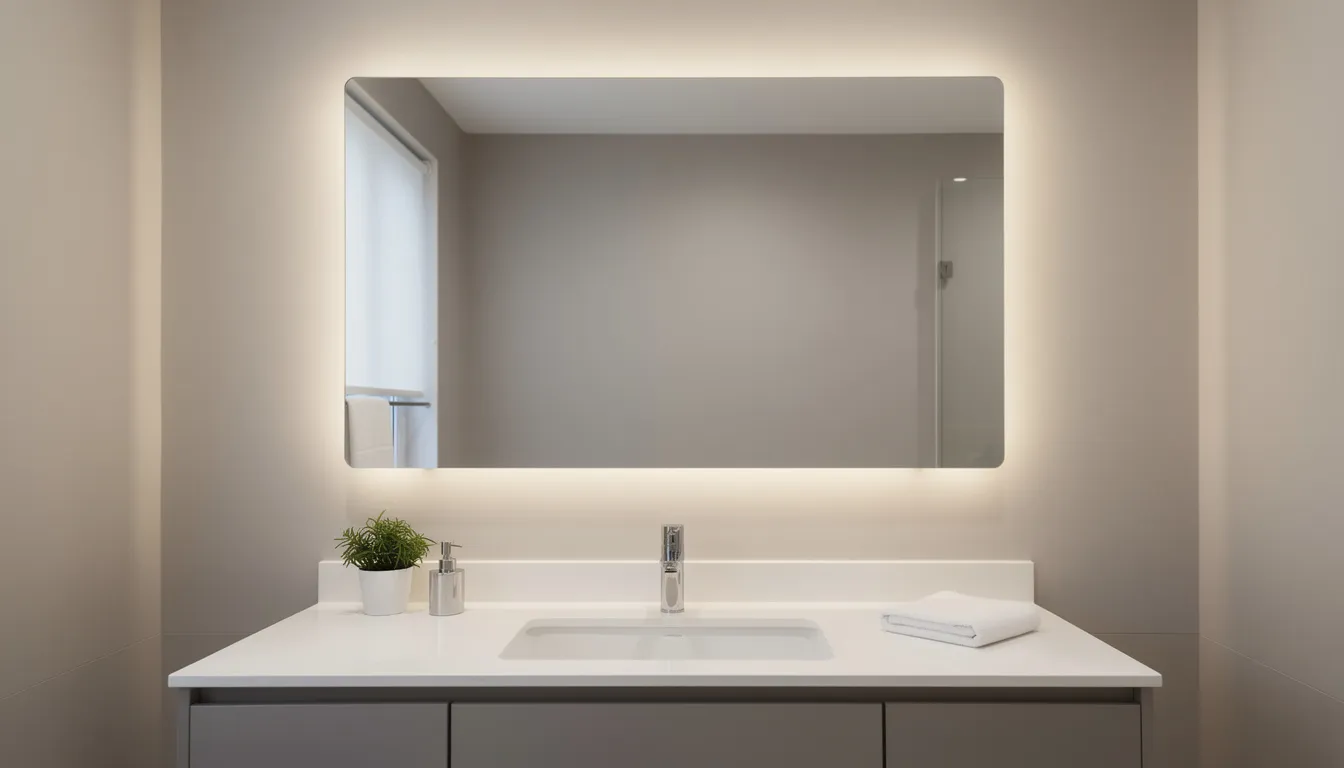
Size options span from compact 24-inch vanity mirrors perfect for a guest bathroom to expansive 60-inch-plus panels suited for a primary bath with a double vanity. Design trends favor frameless or backlit styles that create a floating effect, adding modern elegance without visual clutter. Whether you’re refreshing a small bathroom or designing a spacious master bathroom, there’s a smart mirror that fits.
Choosing the Right Smart Mirror for Your Bathroom
Selecting the right smart mirror comes down to four main criteria:
Size vs. vanity width: Your mirror should be roughly the same width as your vanity or slightly narrower. A 36-inch vanity pairs well with a 30–36-inch mirror, while a double vanity can accommodate larger panels up to 60 inches or more.
Brightness level: Look for mirrors offering at least 300 lumens per foot of width for adequate task lighting. Dimmable options with layered lighting modes give you flexibility throughout the day.
Smart ecosystem compatibility: If you already use Alexa, Google Home, or Apple HomeKit, choose a mirror that integrates seamlessly. This lets you control bathroom mirrors alongside other devices using voice commands or a single app.
Budget tier: Entry-level models in the $250–$400 range focus on led lights and defogging—solid choices for a guest bathroom or secondary space. Premium options ($1,000+) add touchscreens, skin analysis cameras, and deeper smart home integration for your primary bath.
For installation, plan for a dedicated electrical box behind the mirror location. Running power through the wall before finishing keeps cords hidden for a clean aesthetic that supports timeless design rather than a cobbled-together look.
Heated Floors and Towel Warmers: Everyday Luxury Underfoot
Radiant floor heating has become a “must-have” upgrade in primary bathrooms by 2026, especially in colder regions. The technology has been around for decades, but falling costs and smart thermostat integration have pushed it into mainstream bathroom ideas. Stepping onto warm tile on a cold morning transforms the bathing experience from routine to spa like atmosphere.
Electric underfloor mats installed beneath tile, stone, or luxury vinyl provide uniform heating across the floor surface. Most systems warm up in 15–30 minutes, reaching comfortable surface temperatures around 80–85°F. The warmth radiates upward, eliminating cold spots and that shock of frigid tile that makes winter mornings unpleasant.
Smart thermostats or app controls take heated floors from convenient to energy efficient. You can schedule heating only when needed—early mornings before your alarm and evenings when you’re winding down—rather than running all day. This targeted approach keeps operating costs reasonable, typically adding $10–30 monthly to electricity bills for a medium-sized bathroom depending on usage and local rates.
Installation costs vary by floor type and region, generally running $10–20 per square foot including materials and labor. While this adds to remodel budgets, the payoff is significant: uniform heating eliminates bulky baseboard heaters, frees up wall space, and creates the kind of ultimate comfort that makes a bathroom feel like a retreat.
Pro Tip: Consider heated floors even for upper-level bathrooms in 2026 remodels. Modern electric mat systems work well on any subfloor, and the energy savings from zoned heating often offset installation costs within a few years.
Smart Towel Warmers and Heated Storage
Wall mounted towel warmers with programmable timers and Wi-Fi control have become standard in 2026 smart bathrooms. These aren’t the clunky radiator-style units of previous decades—modern heated towel racks feature sleek rails in finishes like matte black, brushed nickel, and warm tones that complement any bathroom decor.
Most 2026 models include eco modes that cycle heating to maintain warmth without constant energy draw, plus auto-off safety features that shut down after 30–90 minutes. You can program them to warm towels before your morning shower or have fresh, dry towels ready when you return from the gym.
For larger master bathroom spaces, heated drawers or cabinets offer a premium option for warming robes and extra towels. These built-in solutions keep the room visually clean while adding convenience that feels unexpectedly luxurious.
Benefits at a glance:
- Warm, dry towels ready when you need them
- Compact design that saves floor space
- Programmable schedules for energy savings
- Multiple finish options to match fixtures
Touchless Faucets and Water-Saving Fixtures
Touchless faucets made the jump from commercial restrooms into residential bathrooms during the early 2020s, and by 2026 they’ve become a mainstream choice for anyone prioritizing hygiene and efficiency. The appeal is straightforward: hands free operation means fewer germs on handles and less cleaning overall.
Sensor operation relies on infrared or capacitive detection to sense hand presence and activate water flow. Modern residential models fine-tune shutoff delays to balance water savings with user-friendliness—long enough to rinse soap, short enough to prevent waste. Flow rates on touchless faucets typically run around 1.2 gallons per minute versus 2.2 gpm on older models, and sensors naturally prevent water running while you brush teeth or shave.
Style options have expanded dramatically. You’ll find single-hole minimalist designs, wall mounted versions for floating vanities, and finishes ranging from brushed nickel and matte black to trending warm brass tones. The compact design of most touchless faucets works well even in a small bathroom where counter space is limited.
When planning installation, discuss battery versus hardwired options with your plumber. Battery-powered units install faster but require periodic replacement, while hardwired models need electrical work but offer long-term reliability. For a full remodel, hardwiring is usually worth the effort; for quick updates, batteries keep things simple.
The hygiene benefits extend beyond germ reduction. Touchless faucets stay cleaner longer with fewer fingerprints and water spots, which means less scrubbing and a bathroom that looks better between deep cleans.
Smart Showerheads and Digital Faucets
Showerheads in 2026 have evolved well beyond basic spray patterns. Many models now include bluetooth speakers for streaming music, LED temperature indicators that shift from blue to red as water warms, and app-based timers that gently remind you when shower time approaches your set limit. These features help households meet conservation goals without feeling restrictive.
Digital faucets at the sink offer similar intelligence. Small temperature displays show exact water temperature, while preset buttons let you tap “warm” or “cool” instead of adjusting handles. Some premium systems track water usage by fixture and send monthly reports, helping households identify patterns and reduce water consumption over time.
Features to compare when shopping:
- Bluetooth or Wi-Fi connectivity for music and app control
- LED color indicators for temperature at a glance
- Usage tracking with monthly reports
- Spray pattern options and massage settings
- Battery life or hardwired power requirements
Self-Cleaning Toilets and Bidets: Hygiene Meets High Tech
Smart toilets have become a core upgrade in 2026 primary bathrooms, driven by growing emphasis on cleanliness, comfort, and sustainability. These fixtures deliver a hygienic experience that conventional toilets simply can’t match, while reducing paper use and offering features that feel surprisingly luxurious once you experience them.
Hallmark features on 2026 smart toilets include a heated seat that eliminates cold-porcelain shock, adjustable bidet wands with customizable pressure and position, warm-air dryers, built-in deodorizing fans, and soft-close lids. Many models add night lights that illuminate the bowl without harsh overhead lighting, and automatic open/close lids activated by motion sensors.
Self-cleaning capabilities set these toilets apart. Pre-mist functions coat the bowl before use, preventing waste adhesion. Anti-stick glazes and electrolyzed water rinse cycles run automatically after each flush, while some high-end models incorporate UV light sanitization for optimal hygiene. The 99.9% bacteria reduction from UV cycles makes these toilets genuinely more sanitary than traditional options.
For homeowners who want smart toilet benefits without a full fixture replacement, retrofit bidet seats offer a budget-friendly entry point. Upgrading your toilet seat with smart features—such as heated seating, integrated bidet attachments, and enhanced hygiene controls—can significantly improve comfort and cleanliness. These seats install on existing toilets using standard rough-in locations and deliver heated seats, bidet functions, and air drying at a fraction of the cost. It’s an excellent Phase 1 upgrade while planning for a more comprehensive remodel later.
Smart Flush and Water Efficiency
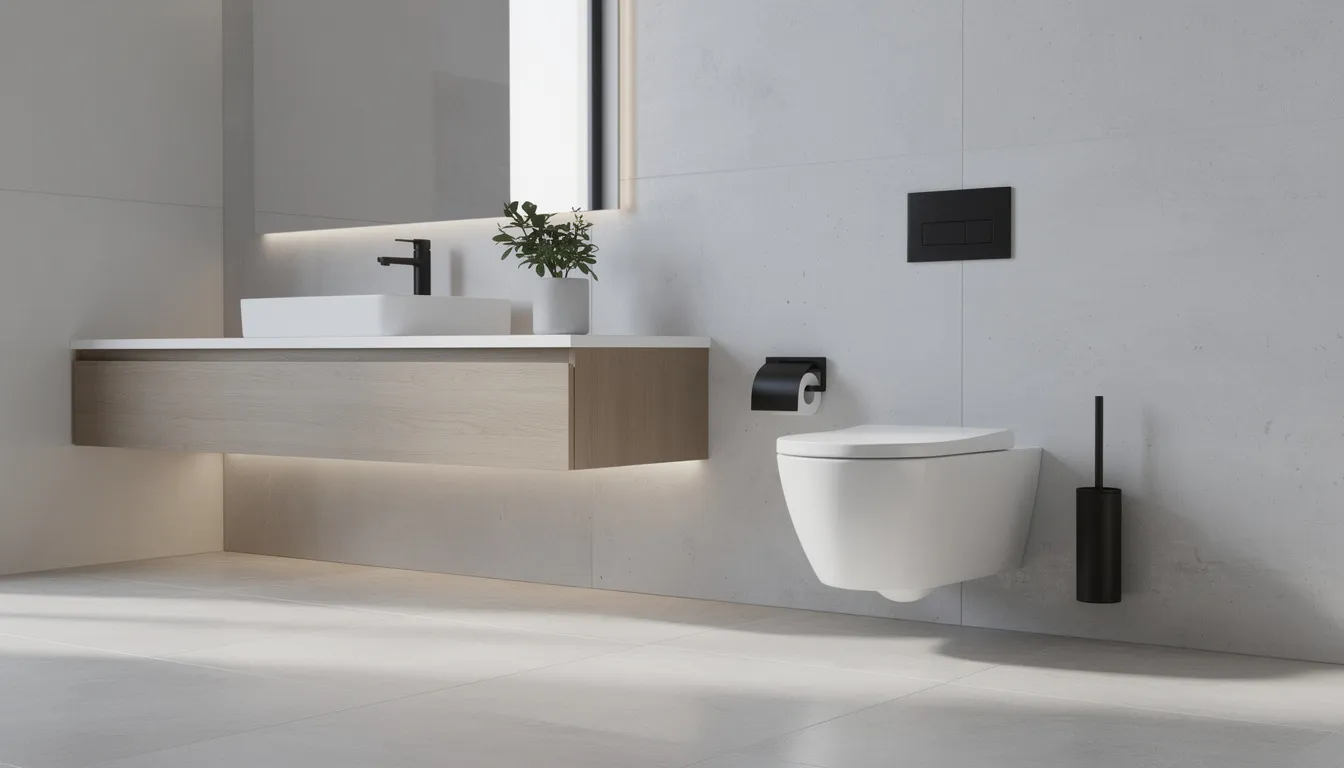
Dual-flush and smart-flush systems adapt water volume based on use, with many 2026 models meeting or exceeding 1.1–1.28 gallons per flush standards while maintaining powerful bowl clearing. This represents significant water savings compared to older 1.6 gpf toilets, adding up to thousands of gallons annually for a typical household.
Beyond conservation, smart toilets include leak detection that monitors fill valve operation and water levels. If something runs longer than expected or shows signs of a minor leak, the system sends alerts to your phone before small issues become expensive problems. This proactive maintenance capability can save significant repair costs and water waste.
What to look for:
- WaterSense-labeled models for verified efficiency
- Dual-flush options with adjustable volume settings
- Leak detection with smartphone alerts
- Quiet flush technology for primary bath comfort
- Self-cleaning features that reduce manual scrubbing
Lighting, Ventilation, and Connected Details That Tie It All Together
The finishing touches make the difference between a bathroom with scattered gadgets and a cohesive smart bathroom that feels intentional. In 2026, layered lighting and smart ventilation systems complete the picture, ensuring bathroom technology works together seamlessly.
Layered lighting combines three elements: ambient recessed lighting for overall illumination, task lighting at the mirror for grooming, and accent or chromotherapy lighting in niches or showers for mood and relaxation. Many homeowners incorporate led lights with tunable color temperatures that shift from energizing cool tones in the morning to calming warm tones at night, supporting natural circadian rhythms.
Modern exhaust fans have evolved far beyond simple switches. 2026 models include humidity sensors that activate automatically when steam rises, motion detection that turns on when you enter, and app controls for remote management. This automatic operation minimizes mold and moisture damage while improving air quality without requiring you to remember to flip a switch.
For those who like to play music or catch up on podcasts during their routine, integrated speakers in exhaust fans or lighting fixtures provide audio without visible equipment. This clutter-free approach delivers entertainment without countertop speakers or wall-mounted devices competing for space.
Smaller connected accessories round out the ecosystem: smart scales that track weight and body fat percentage, leak detectors under vanities that alert you to problems, and motion-sensor soap dispensers that add a touch of hands-free convenience. These “nice-to-have” additions work best after core upgrades are in place, offering convenience without overwhelming the space.
Planning Your 2026 Smart Bathroom Upgrade
The smart bathroom of 2026 centers on four anchor upgrades that deliver the greatest impact: digital or voice-activated shower controls, a smart mirror with integrated lighting, heated floors paired with a towel warmer, and a self-cleaning toilet or bidet seat. Together, these features create the spa like experience that many homeowners dream about.
A phased approach makes these upgrades accessible regardless of budget or timeline:
Phase 1 – Quick Wins (Weekend Projects)
- Install a smart mirror with LED lighting and anti-fog
- Add a touchless faucet at the vanity
- Retrofit a bidet seat on your existing toilet
- Upgrade to smart showerheads with temperature indicators
Phase 2 – Minor Remodel (1–2 Weeks)
- Install wall mounted towel warmers
- Add smart ventilation systems with humidity sensors
- Upgrade to digital faucets with temperature displays
- Incorporate smart scales and leak detectors
Phase 3 – Full Renovation
- Install digital shower controls with voice activation
- Add radiant heated floors with smart thermostats
- Replace toilet with full-feature smart model
- Plan integrated lighting with chromotherapy options
Coordinating finishes and interfaces matters more than individual feature selection. Choose products that share design language—matching finishes like brushed nickel or matte black, compatible app ecosystems, and consistent control methods. This prevents your bathroom from feeling like a technology showroom and keeps the focus on comfort and natural materials rather than gadgetry.
Plan electrical infrastructure early. Smart bathroom technology requires GFCI protection, low-voltage wiring for sensors and controls, and often dedicated circuits for heated floors or towel warmers. Discussing these needs with your bathroom designer or electrician before demolition begins prevents costly changes mid-project.
The smart bathroom of 2026 isn’t about impressing visitors with cutting edge technology—it’s about creating a space that anticipates your needs, conserves resources, and delivers everyday luxury. Whether you’re starting with a single smart mirror or planning a complete transformation, each upgrade builds toward a bathroom experience that feels effortlessly comfortable. Start with what fits your budget today, and build from there.
Future of Smart Bathrooms
Looking ahead, the future of smart bathrooms is set to be more innovative and interconnected than ever before. As smart bathroom technology continues to advance, we can expect a new wave of features that make the bathroom experience even more luxurious, convenient, and energy efficient. Imagine a bathroom where smart mirrors provide personalized lighting and health insights, heated towel racks deliver perfectly warm towels on schedule, and smart ventilation systems automatically maintain optimal air quality—all seamlessly integrated with your smart home systems.
Cutting edge technology will bring even greater automation, with voice-activated controls, remote monitoring, and adaptive systems that learn your preferences over time. Advanced materials, such as self-cleaning surfaces and antibacterial coatings, will further enhance hygiene and reduce maintenance. Sustainability will remain a top priority, with energy-efficient shower heads, water-saving fixtures, and innovative solutions like greywater recycling becoming standard in high tech bathrooms.
As these technologies become more accessible, the possibilities for creating a truly personalized and wellness-focused bathroom are endless. Whether you’re seeking a spa-like retreat or a highly functional family space, the next generation of smart bathroom gadgets and systems will offer numerous benefits for well being, comfort, and long-term energy savings. The future of smart bathrooms is bright—offering convenience, luxury, and sustainability in every shower, soak, and daily routine.
