
Your kitchen is likely the hardest-working room in your house. It’s where your family gathers for breakfast, where you experiment with all the recipes you’ve bookmarked, and where you spend countless hours cooking, cleaning, and connecting. But it’s also one of the most resource-intensive spaces in your home—consuming significant energy, water, and materials every single day. Creating a Green Kitchen can help reduce this impact.
The good news? Building a sustainable Green Kitchen doesn’t require sacrificing style or function. With the right approach to sustainable remodeling materials, energy efficient appliances, and water-saving fixtures, you can create a functional space that’s both beautiful and environmentally responsible.
This guide walks you through everything you need to know about an eco-friendly kitchen remodel—from quick wins you can implement this weekend to comprehensive decisions that will shape your kitchen’s environmental impact for decades to come.
Quick Answer: How to Start Your Eco-Friendly Kitchen Remodel Today
You don’t need a complete renovation to start cutting your kitchen’s energy consumption and environmental impact. A few targeted swaps can deliver noticeable results on your next utility bill while setting the stage for bigger upgrades down the road.
Here are the five fastest wins you can implement right now:
- Switch to LED lights — Replace traditional incandescent bulbs with LED alternatives. They use up to 75% less energy and last dramatically longer, saving money and reducing waste.
- Install a faucet aerator — This inexpensive addition mixes air with water flow, cutting water consumption at your sink without sacrificing pressure. Most cost under $10 and take minutes to install.
- Use power strips for small appliances — Coffee makers, toasters, and other countertop gadgets draw phantom power even when off. A single power strip lets you cut the circuit completely.
- Adjust your refrigerator and freezer temperatures — Set your fridge to 37-40°F and your freezer to 0°F. Colder settings waste energy without improving food safety.
- Start basic composting — A simple countertop caddy for food scraps diverts organic waste from landfills and reduces the methane emissions that come from decomposing food.
These quick changes build momentum. When you’re ready for bigger commitments, the three highest-impact remodel decisions are choosing ENERGY STAR-rated kitchen appliances, selecting low VOC finishes for cabinets and walls, and opting to reface existing cabinets rather than replacing them entirely.
Planning an Eco-Friendly Kitchen Remodel
Sustainability works best when it’s woven into your remodel from the very beginning—not tacked on as an afterthought. The choices you make during the planning phase affect everything from your kitchen’s layout to its materials and appliances for years to come.
Before you meet with contractors or start browsing showrooms, take time to clarify your priorities. Are you primarily focused on lowering energy bills? Improving indoor air quality for your family? Reducing construction waste? Most homeowners want all three, but understanding your main drivers helps you make tradeoffs when they inevitably arise.
Create a simple “green checklist” before your first contractor conversation:
- Identify which current appliances are energy hogs that need replacement
- Assess whether your existing cabinets are structurally sound enough for refacing
- Research local utility rebates and tax incentives for efficient upgrades
- Note any indoor air quality concerns (old finishes, poor ventilation)
- Set a realistic budget that accounts for higher-quality, longer-lasting materials
Consider current incentives that can influence your choices. Federal tax credits through 2024-2026 may apply to certain energy-efficient upgrades, including induction cooktops and heat-pump water heaters. Many local utilities offer rebates for efficient dishwashers and refrigerators. These programs can offset the higher upfront cost of sustainable choices.
Think lifecycle, not just price tag. A cheaper countertop that needs replacing in seven years has a larger environmental impact than a durable surface that lasts twenty-five. Consider durability, repairability, and recyclability for every major item—your cabinets, countertops, flooring, and appliances—rather than focusing solely on upfront cost.
Energy-Efficient Appliances: The Heart of a Green Kitchen
Kitchen appliances typically account for a significant share of household energy use, and the models you select during a remodel will determine your consumption for the next 10-15 years. Upgrading to energy efficient appliances locks in savings that compound over time.
Understanding energy labels helps you make informed decisions. ENERGY STAR certification indicates that an appliance meets strict efficiency standards set by the EPA. But don’t stop at the logo—examine the yellow EnergyGuide label to compare annual kWh usage and estimated operating costs between models.
When evaluating 2024-2026 models, focus on:
- Refrigerators — Top-freezer and bottom-freezer configurations typically use less energy than side-by-side models with through-door ice dispensers
- Dishwashers — Look for soil sensors, eco cycles, and low gallons-per-cycle ratings
- Ranges — Induction cooktops outperform traditional gas and electric in efficiency and indoor air quality
- Ventilation — Proper range hoods are essential, especially with gas cooking, to maintain healthy air
Smart features can genuinely save energy when used strategically. Running your dishwasher during off-peak hours via delay-start reduces demand on the grid. Smart plugs that cut power to idle appliances eliminate phantom loads. However, many “smart” features are just marketing—focus on those with measurable efficiency benefits.
Maintenance habits preserve efficiency over time:
- Clean refrigerator coils every six months to maintain cooling efficiency
- Check door seals on your fridge and oven annually for cracks or gaps
- Descale your dishwasher quarterly if you have hard water
- Avoid overfilling freezers, which restricts airflow and forces the compressor to work harder
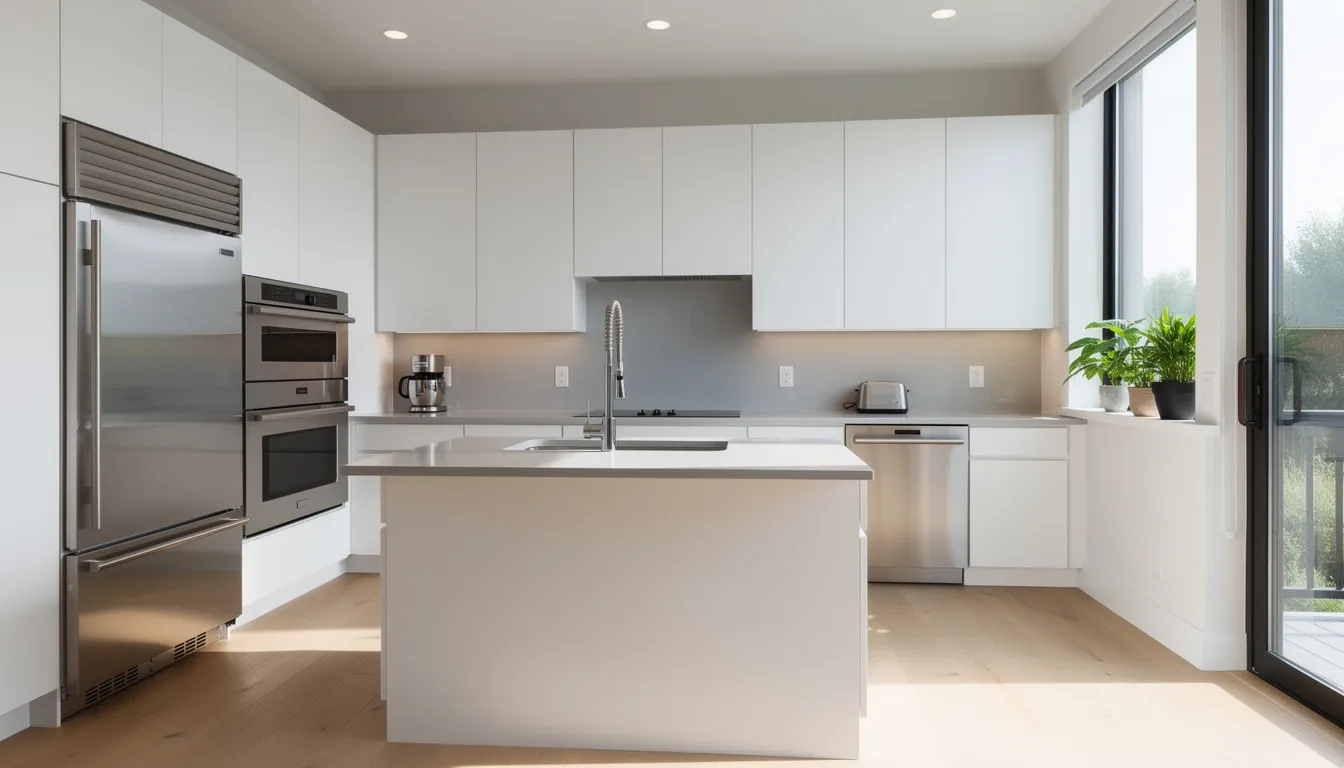
Choosing an Energy-Efficient Refrigerator and Freezer
Your refrigerator runs 24 hours a day, 365 days a year—making it often the single largest appliance load in your kitchen. Efficiency here matters enormously.
Newer ENERGY STAR models can cut electricity use by 10-30% compared to refrigerators from 10-15 years ago, depending on size and configuration. When shopping, compare the annual kWh figures on EnergyGuide labels rather than relying solely on the ENERGY STAR logo.
Right-size your refrigerator. Many families default to the largest model that fits their space, but oversized units consume more power than necessary. For most households, 18-22 cubic feet provides ample storage without excess energy consumption.
Features that genuinely save energy:
- Tight-sealing magnetic door gaskets
- LED interior lighting (uses less energy than incandescent and produces less heat)
- Simple, accessible temperature controls that you’ll actually adjust
- Top-freezer or bottom-freezer configuration over side-by-side
Features that often increase consumption:
- Through-door ice and water dispensers (convenient but energy-intensive)
- Excessive smart displays and touchscreens
- Built-in wine coolers or specialty compartments
Set your refrigerator temperature to 37-40°F (3-4°C) and your freezer to 0°F (-18°C). These settings balance food safety with efficiency—colder temperatures waste energy without improving preservation.
Induction Cooktops and Ovens vs. Traditional Ranges
Induction cooktops represent one of the most significant efficiency upgrades available for a green kitchen. They transfer approximately 85-90% of their energy directly to the cookware, compared to roughly 40% for traditional gas burners.
How induction works: Electromagnetic fields heat compatible pots and pans directly, rather than heating a burner that then heats the cookware. This means faster boiling times, instant temperature response, cooler kitchen air, and dramatically less energy wasted as heat.
The indoor air quality benefits are substantial. Gas stoves release nitrogen dioxide and other pollutants into your kitchen air—a concern that has led many North American and European cities to encourage electric cooking in new construction. Induction eliminates combustion entirely.
Before switching to induction, consider:
- Your cookware must have magnetic bases (cast iron and many stainless steel pans work; aluminum and copper do not without a magnetic layer)
- Combined induction cooktop and electric convection oven ranges offer an integrated solution
- Ventilation is still important for cooking odors and moisture, even without combustion byproducts
For ovens, efficiency strategies include:
- Preheating only when necessary—many dishes don’t require it
- Batch baking multiple items simultaneously
- Using convection modes, which circulate heat and can reduce cook times by 25%
- Choosing the right size: use a toaster oven or air fryer for small meals instead of heating your full oven
High-Efficiency Dishwashers and Small Appliances
Modern dishwashers are remarkably efficient—often using less energy and water than washing the same load by hand, especially when run full on eco settings.
When selecting a dishwasher, prioritize:
- Low annual kWh ratings on the EnergyGuide label
- Low gallons-per-cycle water usage
- Soil sensors that adjust water and cycle time based on actual dish dirtiness
- Half-load or adjustable rack options for smaller loads
- Air-dry or fan-dry modes that skip the heated drying element
Running your dishwasher only when full maximizes efficiency. Use the delay-start function to run during off-peak energy hours (typically overnight) where time-of-use rates apply in your area.
Small appliances can also reduce kitchen energy consumption:
- Electric kettles with auto shutoff boil water faster and with less energy than stovetop kettles
- Toaster ovens and air fryers heat small meals efficiently without warming your entire oven
- Pressure cookers and slow cookers reduce cook times dramatically, using less energy overall
- Microwave ovens remain one of the most efficient ways to reheat food
Correct usage habits multiply these savings. Scrape dishes rather than pre-rinsing under running water. Load dishes properly according to manufacturer guidelines. Skip the heated dry cycle—opening the door after the wash cycle lets dishes air-dry with zero additional energy.
Sustainable Remodeling Materials for Countertops and Cabinets
The materials you select for your kitchen’s surfaces and storage have lasting environmental impact—affecting resource extraction, manufacturing emissions, indoor air quality, and eventual disposal. Choosing sustainable remodeling materials is central to an eco-friendly kitchen remodel.
Evaluate materials against these sustainability criteria:
- Recycled content — Does it incorporate post-consumer or post-industrial waste?
- Renewability — Is the raw material replenished faster than it’s harvested?
- Low embodied energy — How much energy went into manufacturing and transport?
- Local sourcing — Can you reduce shipping distances by choosing regional options?
- Longevity — Will it last decades, or need replacement within a few years?
- End-of-life options — Can it be recycled, composted, or safely disposed?
The following sections break down specific options for countertops, cabinets, and finishes that meet these criteria while delivering the durability and aesthetics you expect.
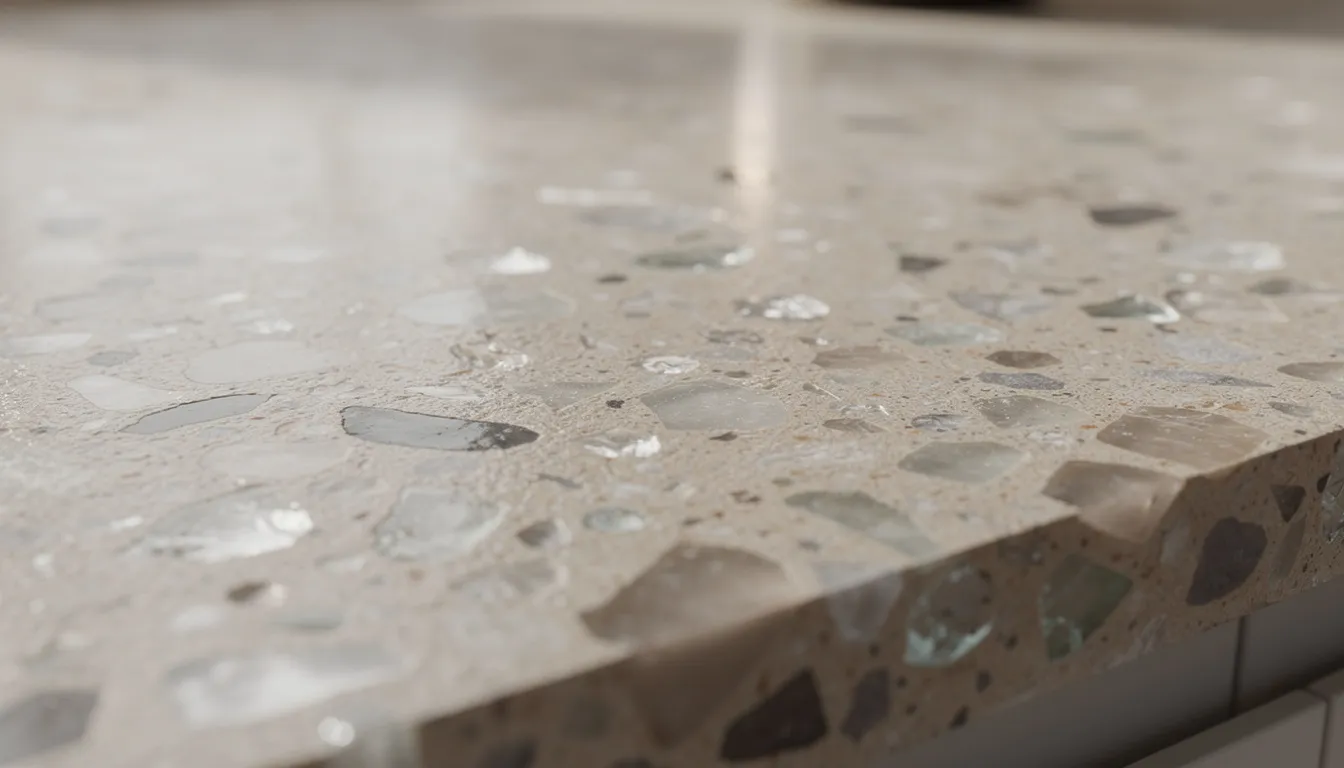
Eco-Friendly Countertops: Recycled Glass, Composites, and More
Countertops represent a major investment in any remodel, making material selection critically important for sustainability.
Recycled glass countertops contain post-consumer bottles and industrial glass bonded with cement or low-VOC resins. They create a unique aesthetic with visible glass fragments and come in a range of colors. These surfaces divert waste from landfills while offering durability comparable to traditional stone.
Paper composite counters combine recycled paper with water-based resins to create a surprisingly durable, heat-resistant surface. They’re often used in labs and workshops for their toughness, but they work beautifully in residential kitchens too.
Sustainable composite options include quartz surfaces that incorporate recycled content. While natural quartz itself is abundant, manufacturing processes vary—look for brands that document their recycled content percentages and sustainability practices.
Solid surface countertops made from acrylic blends offer repairability advantages—scratches and burns can be sanded out rather than requiring full replacement. This extends lifespan and reduces waste over time.
Other lower-impact options to consider:
- Bamboo butcher block — Bamboo is a rapidly renewable resource that regrows in 3-5 years compared to decades for traditional hardwoods
- Reclaimed wood counters — Salvaged wood from old buildings or timber operations keeps material out of landfills and offers unique aesthetic character
- Concrete countertops — Custom-poured concrete can incorporate recycled aggregates and provides exceptional durability, though manufacturing does have a significant carbon footprint
- Locally quarried stone — If you prefer natural stone, sourcing regionally reduces transport emissions substantially
For finishes and care: Use non toxic finishes and sealers rather than solvent-based products. Many sustainable countertop materials can be maintained with simple soap and water, avoiding the need for harsh chemicals. Plan for periodic refinishing rather than full replacement when surfaces show wear.
Cabinetry: Refacing vs. Replacing as the Eco-Friendly Choice
Cabinets are among the most resource-intensive components of any kitchen, consuming significant wood, manufactured panels, hardware, and finishes. This makes them a priority for sustainable decision-making.
Cabinet refacing keeps your existing cabinet boxes in place while replacing doors, drawer fronts, and hardware. The structural frames get cleaned, repaired if needed, and often re-skinned with a new veneer.
The environmental benefits of refacing are substantial:
- Dramatically less demolition waste heading to landfill
- Fewer new timber resources required for manufacturing
- Reduced transport emissions from fewer materials shipped
- Lower embodied energy overall compared to full replacement
Refacing works best when:
- Existing cabinet boxes are structurally sound (solid plywood or good-quality particle board)
- The current layout meets your functional needs
- Boxes show no water damage, mold, or pest issues
- You’re satisfied with the general size and placement of storage
Full replacement makes sense when:
- Boxes are damaged, warped, or failing structurally
- You need to reconfigure the layout entirely
- Current cabinets are extremely low quality and won’t hold new doors well
- You’re expanding the kitchen footprint
For both new cabinets and refaced doors, choose eco-friendly materials:
- FSC-certified wood from responsibly managed forests
- Formaldehyde-free plywood or MDF for structural components
- Low VOC or water-based finishes applied to doors and frames
- Wood flour-based composites as alternatives to virgin timber
Don’t forget reuse. If your old cabinet boxes or doors are in good condition, donate them to local salvage yards, Habitat for Humanity ReStores, or community reuse centers. What doesn’t work for your remodel may be perfect for someone else’s project.
Low-VOC Paints, Stains, and Cabinet Finishes
Volatile organic compounds off-gas from many conventional paints and finishes, compromising indoor air quality in a space where your family spends significant time cooking and eating.
VOCs include a range of chemicals released during and after application—some with immediate irritation effects, others with longer-term health concerns. In high-use spaces like kitchens, minimizing exposure matters.
Look for third-party certifications on paints and clear coats:
- GREENGUARD Gold (stringent limits on chemical emissions)
- Green Seal certified paints
- EU Ecolabel equivalents for European products
Understand labeling distinctions. “Low-VOC” and “zero-VOC” have different thresholds, and neither is fully standardized. Additionally, base paints may meet low-VOC standards, but added tints can increase VOC content. Ask for data on the complete tinted product, not just the base.
For cabinets specifically:
- Choose water-based polyurethane or acrylic finishes over solvent-heavy lacquers
- Linseed oil-based finishes offer a traditional, low-toxicity option for natural wood
- Avoid high-gloss solvent finishes when possible—they typically contain higher VOC levels
Scheduling and ventilation matter as much as product selection. Complete all painting and finishing well before moving back into the space. Ventilate aggressively for several days to weeks after application using fans and open windows. Off-gassing diminishes over time, but the initial period is most critical for reducing exposure.
Flooring, Walls, and Backsplash: Durable, Low-Impact Surfaces
High-traffic kitchen surfaces must balance sustainability with practical durability and easy maintenance. Early replacement due to wear defeats the environmental purpose of choosing green materials in the first place.
Eco-friendly flooring options for kitchens:
- FSC-certified hardwood — Responsibly harvested and long lasting when properly maintained
- Reclaimed wood flooring — Salvaged from old buildings, offering character and keeping new timber demand low
- Bamboo flooring — Harvested from a rapidly renewable resource that regrows in years rather than decades
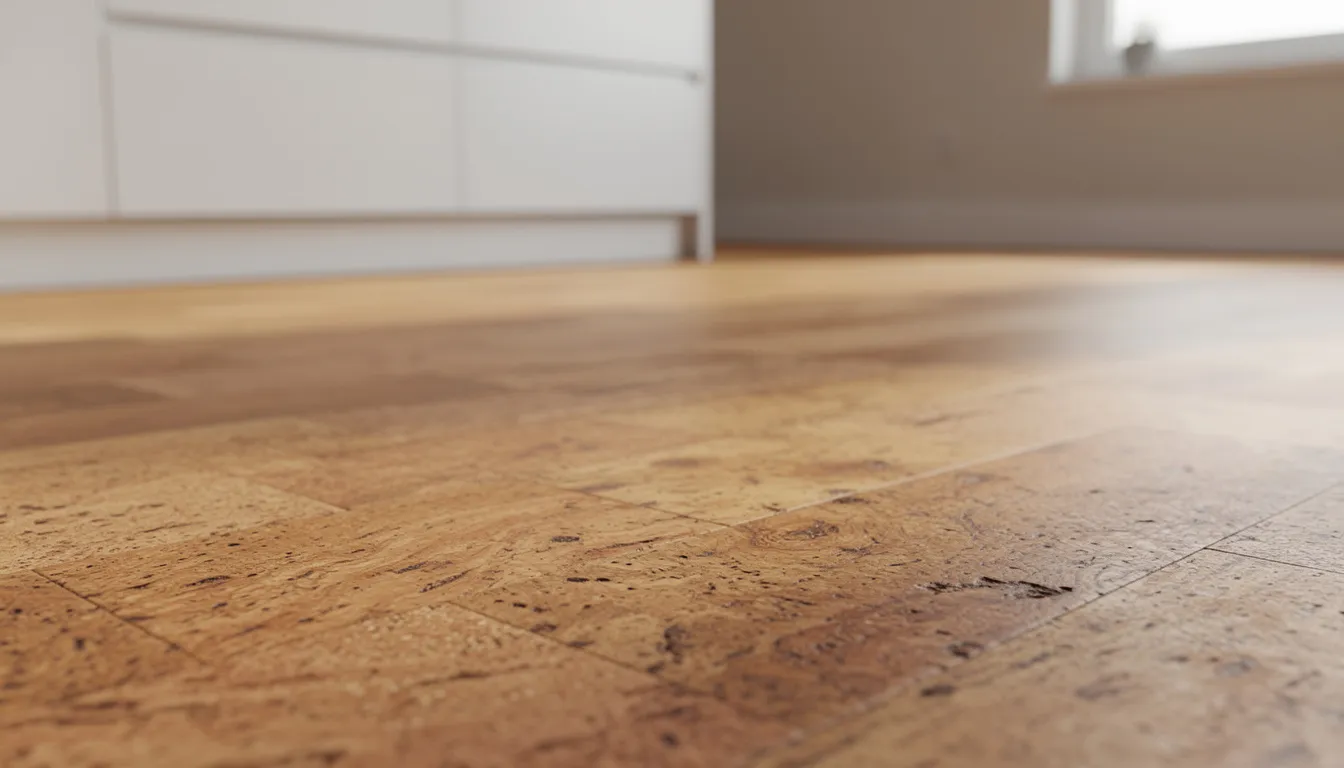
- Cork flooring — Made from bark that regenerates without harvesting the tree, naturally antimicrobial and comfortable underfoot
- Linoleum flooring — Made from linseed oil, wood flour, and natural materials (not to be confused with vinyl), biodegradable at end of life
- Ceramic or porcelain tile — Extremely durable, often available with recycled content, and easy to clean without harmful chemicals
For walls and backsplashes:
- Recycled glass tile offers moisture resistance and visual interest
- Low VOC paints provide simple, refreshable wall coverage
- Cement-based plasters or limewash finishes resist moisture and grease naturally
- Light-colored, reflective surfaces reduce the need for artificial lighting
Installation considerations:
- Specify low-VOC adhesives and grouts for tile installations
- Choose lighter finishes where practical—they reflect natural light and reduce energy consumption from artificial sources
- Select materials that clean easily with simple, non-toxic products to minimize long-term chemical use
Water-Saving Fixtures and Smarter Water Use
After bathrooms, kitchens are typically the second-largest water use area in most homes. Efficient fixtures protect both the environment and your utility budget.
Modern water-saving faucets combine reduced flow with good performance:
- Aerators reduce flow to around 1.5 gallons per minute or less while maintaining adequate pressure
- Pull-down sprayers with multiple settings let you use high flow only when needed
- Touch or sensor controls prevent water from running while your hands are occupied with dishes
WaterSense-labeled faucets meet EPA criteria for both water efficiency and performance. For existing kitchens, retrofitting an aerator is a low-cost upgrade that takes minutes to install.
Integrate water efficiency across your remodel:
- Choose dishwashers with low gallons-per-cycle ratings
- Consider instant hot water dispensers or recirculating systems to eliminate wasted cold water while waiting for hot
- Select filtration systems that reduce water consumption compared to running taps to flush lines
Simple behavioral habits multiply the impact of efficient fixtures:
- Scrape dishes rather than pre-rinsing under running water
- Collect water while waiting for hot to use on houseplants or gardens
- Run dishwashers only when full
- Fix dripping faucets promptly—even slow drips waste gallons over time
Smart Sink, Filtration, and Greywater Considerations
On-tap or under-sink water filtration systems reduce reliance on bottled water, cutting plastic waste and transport emissions while delivering clean drinking water instantly.
Filtration options include:
- Activated carbon filters that remove chlorine taste and many contaminants
- Reverse osmosis systems for more comprehensive purification
- Inline filters built into refrigerator water dispensers
Sink selection supports sustainability too. Deeper basins accommodate soaking dishes without needing to refill constantly. Integrated drainboards eliminate the need for separate drying racks. Durable materials like stainless steel or fireclay last decades and can be repaired rather than replaced.
Greywater reuse refers to recycling wastewater from sinks for irrigation or other non-potable uses. Kitchen sink water is more heavily regulated than bathroom greywater due to food particles and grease, but some advanced systems can pretreat and redirect it. Check local codes before planning any greywater system.
When planning under-sink space, consider:
- Room for a compact filtration system
- Space for a compost caddy or bins for recyclables
- Lead-free, certified-safe pipes and fixtures for drinking water lines
- Easy access for filter changes and maintenance
Low-Waste Habits and Accessories for a Sustainable Kitchen
Even the greenest remodel needs everyday habits and smart accessories to fully deliver environmental benefits. The materials you chose for countertops and cabinets matter, but so does what happens on those surfaces every day.
Zero-waste and low-waste swaps for daily kitchen life:
- Reusable cloth towels instead of single-use paper towels
- Glass or stainless-steel food containers replacing disposable plastic
- Reusable beeswax wraps or plant-based alternatives in place of conventional cling film
- Cloth produce bags for shopping instead of plastic bags
Sustainable cleaning tools reduce both waste and chemical exposure:
- Biodegradable sponges and compostable scrubbers
- Wooden brushes with natural bristles (many are compostable when worn out)
- Refillable soap dispensers that reduce packaging waste
- Concentrated dish soaps that require less plastic per wash
Set up an efficient waste station. Place clearly labeled bins for recycling, compost, and landfill waste close to your main prep area. When sustainable sorting is convenient, it becomes automatic. Many cabinet manufacturers offer pull-out organizers designed specifically for waste separation.
Food waste prevention starts with organization:
- Label leftovers with dates in clear containers
- Use a first-in, first-out rotation system for both fridge and pantry
- Meal plan to buy exact ingredient quantities needed
- Dedicate one evening per week to “use-it-up” meals that clear aging ingredients
Composting and Food Waste Reduction in the Kitchen
Food waste generates significant environmental impact. When organic material decomposes in landfills without oxygen, it produces methane—a greenhouse gas far more potent than carbon dioxide in the short term. Diverting food scraps to composting is a core part of any sustainable kitchen strategy.
Setting up kitchen composting:
- Countertop or under-sink caddies hold daily scraps conveniently
- Empty regularly to outdoor compost piles, municipal green bins, or community garden drop-offs
- Charcoal-filtered lids control odors in sealed countertop models
Common compostable kitchen items:
- Fruit and vegetable peels, cores, and scraps
- Coffee grounds and paper filters
- Tea leaves and bags (if plastic-free)
- Eggshells (crushed)
- Uncoated paper towels
Items typically not home-compostable (unless your local system accepts them): oily foods, meat scraps, dairy products, and cooked food with sauces. Check your municipality’s guidelines for commercial composting programs that may accept these materials.
Reduce waste before it happens. Batch cooking creates multiple meals from single ingredient purchases. Creative leftover recipes turn yesterday’s roasted vegetables into today’s soup, frittata, or grain bowl. When you’re not sure what’s in the fridge, a delicious improvised meal often beats ordering takeout—and prevents food from going to waste.
Simple storage practices extend food life:
- Store produce properly (some items do better on the counter, others need refrigeration)
- Use clear containers so you can see what’s inside without opening
- Move older items forward when restocking
- Keep a running list on your refrigerator door of items that need using soon
Bringing It All Together: Designing a Kitchen That Stays Green for Decades
A truly sustainable kitchen combines energy efficient appliances, eco-friendly countertop options, low VOC cabinetry finishes, and water-saving fixtures into a cohesive space that’s both beautiful and environmentally responsible.
You don’t have to do everything at once. If a full remodel isn’t feasible right now, phase your improvements strategically. Start with an efficient dishwasher or induction cooktop this year. Plan for sustainable countertops and cabinet refacing when your budget allows. Each upgrade builds on the last.
Sustainable design is fundamentally about long-term thinking. Choose timeless layouts that won’t feel dated in five years. Select neutral but warm finishes that age gracefully. Invest in durable materials that won’t need early replacement. The most sustainable kitchen is one you’ll love for decades—not one you’ll gut and redo in seven years.
Track your results. Document your energy and water bills before and after upgrades. Your kitchen becomes a small case study that proves the real-world benefits of green choices. These numbers can guide future decisions and demonstrate that sustainability pays off in tangible ways.
A green kitchen isn’t just about checking boxes on an eco-friendly list. It’s about creating a space where your family can gather for breakfast, experiment with vegan recipes or master pots full of comfort food, and live well—all while treading lighter on the planet.
Start with the quick wins. Build toward bigger changes. Share what you learn with others. The sustainable kitchen you create today becomes part of a larger movement toward homes that demand less from the earth while giving more to the people who live in them.
Your next step? Pick one upgrade from this guide and put it on your calendar. Whether it’s installing that faucet aerator this weekend or scheduling a consultation for expert guidance on a full remodel, every action moves you closer to the kitchen—and the life—you want to create.
